Jackdaw
Coloeus monedula
The Jackdaw is a common and widespread species in Britain, often seen in urban and rural areas, particularly near woodland edges and farmland, throughout the year. They can be found in a variety of habitats, including parks, gardens, and coastal cliffs.
Field Identification Guide
Use these features to identify Jackdaw in the field.
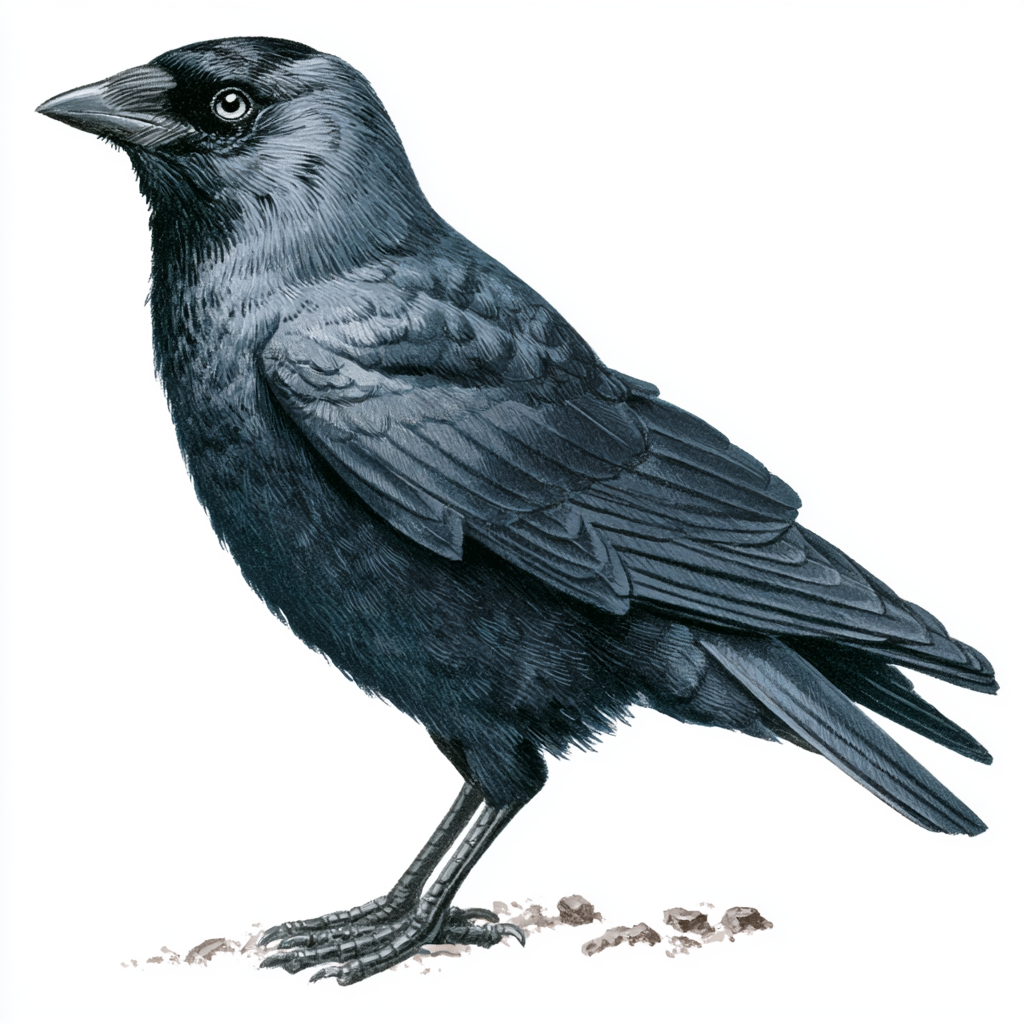
The Jackdaw can be identified by its black crown, wings, and tail, contrasting with its pale grey-brown body, as well as its distinctive silvery sheen to the feathers on its back, and its relatively small size. Its short, stout bill and legs are also notable features.
The Jackdaw is smaller than a Carrion Crow, but larger than a Blackbird, with a length of around 32-35 cm.
The male Jackdaw has a blackish crown, wings, and tail, with a pale grey-brown back, wings, and belly, and a distinctive silvery sheen to the feathers on its back, with no significant seasonal variation.
The female Jackdaw is similar to the male, with no notable differences in plumage.
The Jackdaw's call is a loud, harsh "jack-jack-jack" or "chack-chack-chack", often repeated in a series, and can also produce a variety of other sounds, including rattles and squeaks.
Jackdaws are omnivorous birds, feeding on a wide range of food sources, including insects, seeds, and small vertebrates, and are known for their bold and curious nature, often approaching humans for food. They are also highly social birds, often found in large flocks, and are skilled flyers, with a swift and agile flight style.
The Jackdaw can be confused with other corvids, such as the Carrion Crow and the Rook, but can be distinguished by its smaller size, silvery sheen to the back, and pale grey-brown body, as well as its distinctive call and social behaviour.
Quick Facts
Who's spotted this?
Loading...
Recent community sightings
Loading recent sightings...