Whitethroat
Curruca communis
The Whitethroat is a common summer visitor to Britain, typically seen in open countryside with scrub and hedgerows from May to September, with peak sightings in June and July. It can be found in a variety of habitats, including farmland, heathlands, and coastal areas.
Field Identification Guide
Use these features to identify Whitethroat in the field.
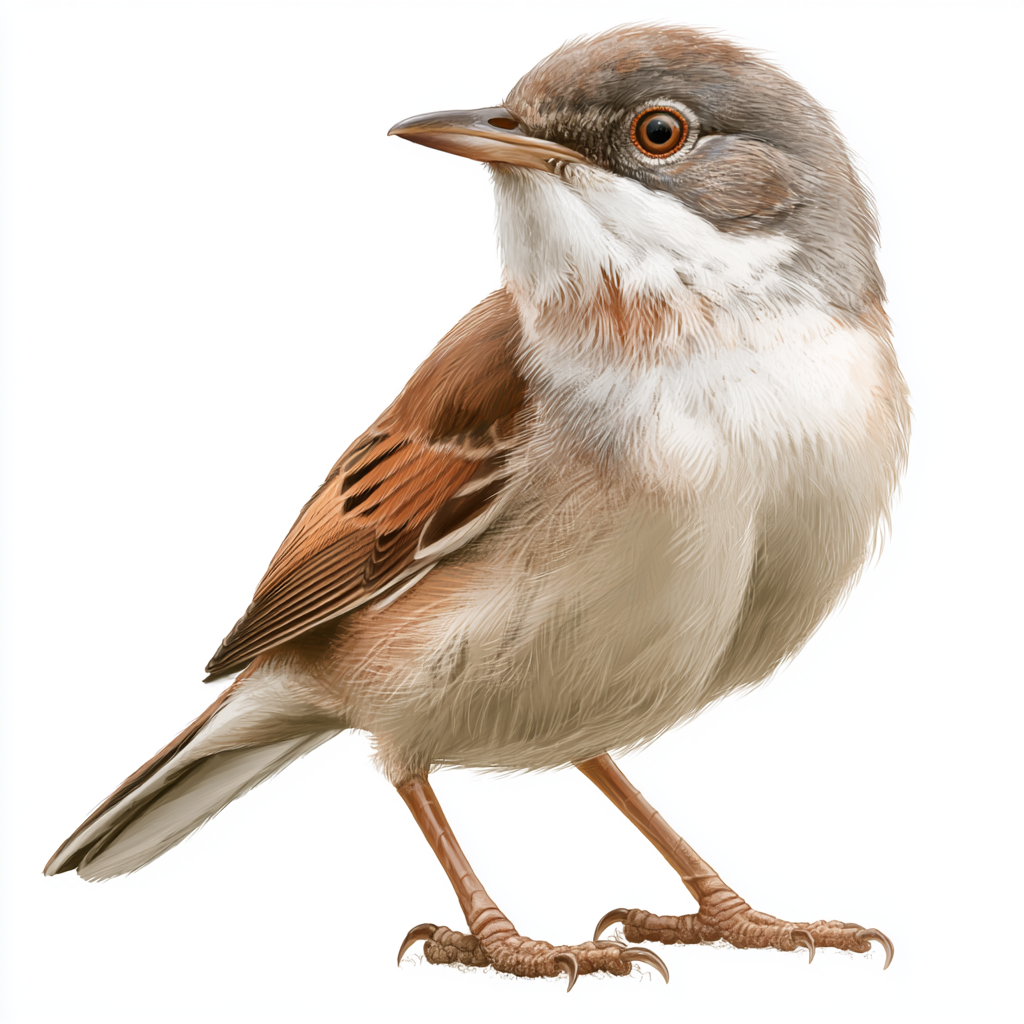
The Whitethroat is distinguished by its grey-brown back, white throat patch, and distinctive white eye-ring, as well as its pale wing bars and dark tail feathers. Its white throat patch is a key identification feature, contrasting with its otherwise dull brown plumage.
The Whitethroat is slightly smaller than a House Sparrow, measuring around 12-13 cm in length.
The male Whitethroat has a grey-brown back, wings, and tail, with a white throat patch and pale wing bars, and its plumage remains relatively consistent throughout the year.
The female Whitethroat is similar to the male, with a slightly duller grey-brown plumage and a less prominent white throat patch.
The Whitethroat's song is a scratchy, rattling melody, often described as a series of descending phrases, while its call is a sharp, metallic "tak" or "tek" sound.
Whitethroats are active birds, often seen flitting between bushes and hedgerows in search of insects and spiders, and they have a distinctive, jerky flight style, with rapid wingbeats and a tendency to dart between cover.
The Whitethroat can be confused with the Lesser Whitethroat, but can be distinguished by its larger size, greyer back, and more prominent white throat patch, as well as its different song and call.
Quick Facts
Who's spotted this?
Loading...
Recent community sightings
Loading recent sightings...