Barolo Shearwater
Puffinus baroli
The Barolo Shearwater is a rare visitor to British waters, typically seen during periods of strong winds or storms that blow them off course from their North Atlantic breeding grounds. Sightings in Britain are infrequent and often limited to the western coastal regions.
Field Identification Guide
Use these features to identify Barolo Shearwater in the field.
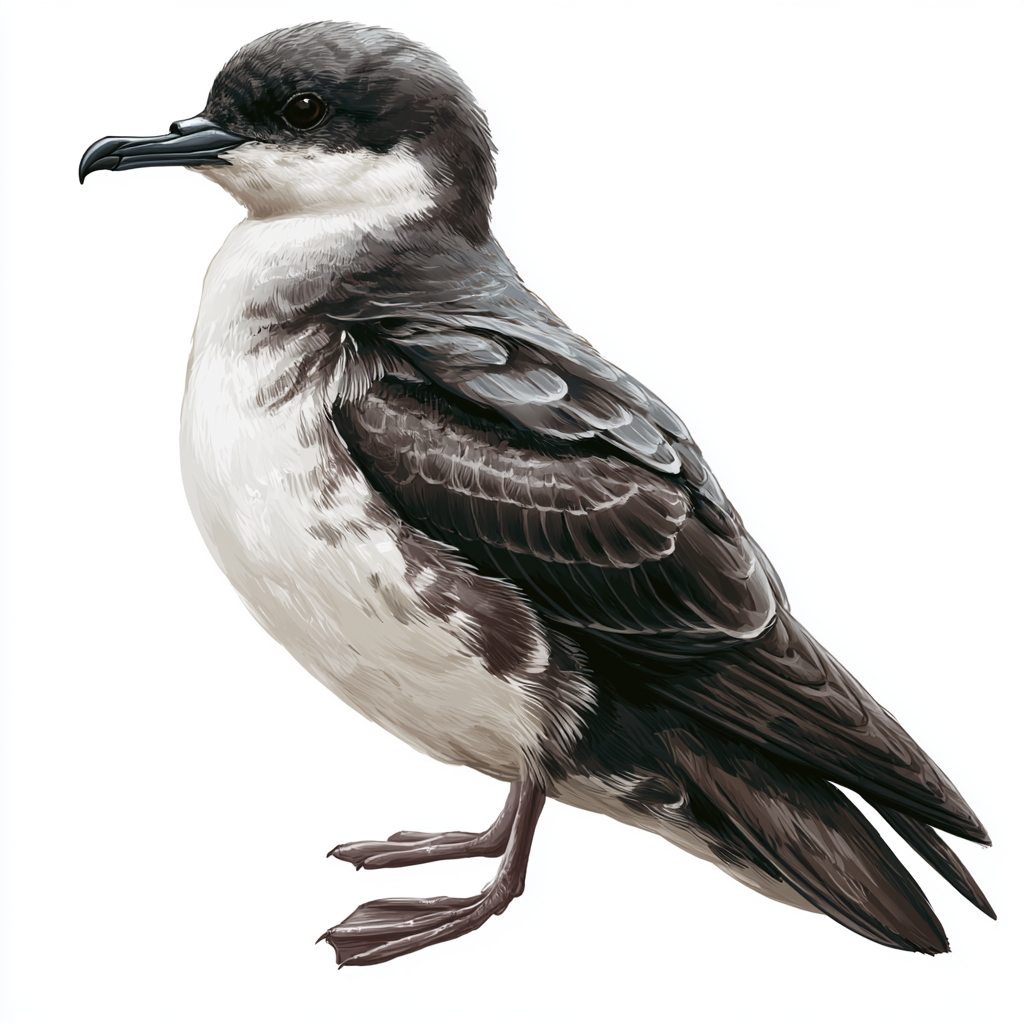
The Barolo Shearwater can be identified by its small size, dark brown upperparts, and white underparts, as well as its distinctive black stripe that runs across its forehead. Its wings are long and narrow, with a distinctive silvery sheen on the primaries.
The Barolo Shearwater is smaller than a Starling, measuring around 25-30 cm in length.
The male Barolo Shearwater has a dark brown back and wings, with a white belly and white undertail coverts, and a black stripe that runs across its forehead.
The female Barolo Shearwater is similar to the male, with no notable differences in plumage.
The Barolo Shearwater's call is a high-pitched, sharp "kee-kee-kee" or "chi-chi-chi" sound, often heard at night or during breeding season.
Barolo Shearwaters are pelagic birds that feed on small fish, squid, and crustaceans, typically diving from the surface or pursuing prey while in flight, and are known for their rapid, gliding flight style.
The Barolo Shearwater can be confused with the Manx Shearwater, but can be distinguished by its smaller size, darker upperparts, and distinctive black forehead stripe, as well as its more rapid wingbeats.
Quick Facts
Who's spotted this?
Loading...
Recent community sightings
Loading recent sightings...