Dusky Warbler
Phylloscopus fuscatus
The Dusky Warbler is a rare migrant to Britain, typically seen during the autumn months, particularly in the eastern and southern regions, often in areas with dense vegetation and scrub. It is a species that breeds in the east Palearctic, making its appearances in Britain infrequent and usually associated with easterly winds.
Field Identification Guide
Use these features to identify Dusky Warbler in the field.
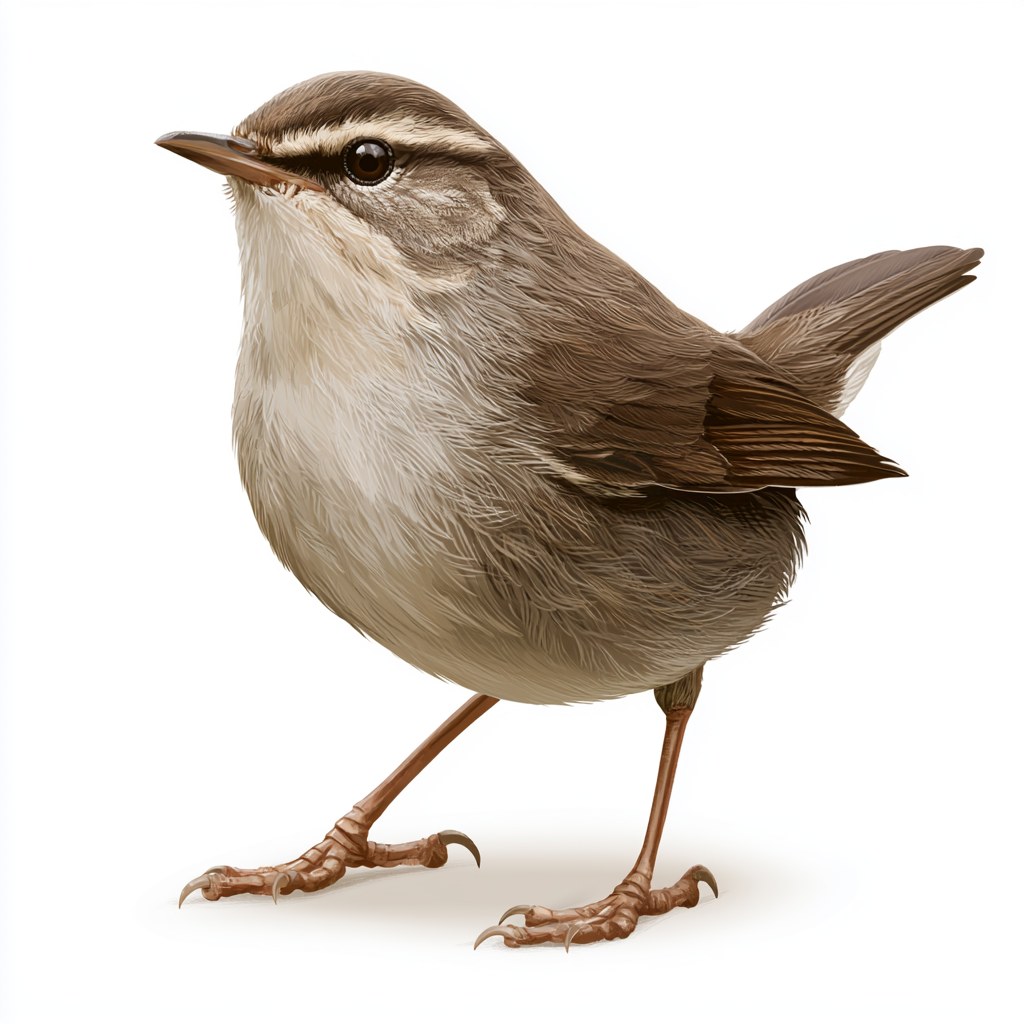
The Dusky Warbler can be identified by its dull brownish-grey plumage, white eyebrow stripe, and lack of distinctive wing bars, which distinguish it from other warbler species. Its overall appearance is rather plain, making it reliant on these key features for identification.
The Dusky Warbler is slightly smaller than a Chiffchaff, making it a compact and agile bird that can be easily overlooked in dense undergrowth.
The male Dusky Warbler has a uniform brownish-grey plumage with a white eyebrow stripe and pale legs, with little to no seasonal variation in its appearance, maintaining its dull colouration throughout the year.
The female Dusky Warbler is similar to the male, with no notable differences in plumage, making sexing of this species challenging based on visual cues alone.
The Dusky Warbler's call is a sharp, metallic "tak" or "tek" sound, often repeated in a series, while its song is a short, melodic phrase that is rarely heard in Britain.
The Dusky Warbler is an active and skulking species, often feeding on insects and spiders in dense vegetation, and when alarmed, it will dart rapidly through the undergrowth, making it difficult to follow.
The Dusky Warbler can be confused with the Radde's Warbler, but it lacks the Radde's Warbler's distinctive wing bars and has a more uniform plumage, while its white eyebrow stripe is also less prominent than that of the Radde's Warbler.
Quick Facts
Who's spotted this?
Loading...
Recent community sightings
Loading recent sightings...