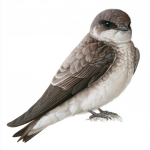
Egyptian Nightjar
Caprimulgus aegyptius
The Egyptian Nightjar is a rare migrant to Britain, typically seen during the summer months, and is most notable for its nocturnal habits and distinctive calls. It can be spotted in the southern regions of England, particularly in areas with low vegetation and open grasslands.
Field Identification Guide
Use these features to identify Egyptian Nightjar in the field.
The Egyptian Nightjar can be identified by its mottled brown and grey plumage, long wings, and distinctive white patches on its throat and wings. Its broad, rounded wings and long tail are also distinctive features.
The Egyptian Nightjar is slightly smaller than a Starling, with a length of approximately 23-25 cm.
The male Egyptian Nightjar has a grey-brown back, wings, and tail, with a pale grey-brown breast and belly, and distinctive white patches on its throat and wings.
The female Egyptian Nightjar is similar to the male, but with a more muted colouration and less distinctive white patches.
The Egyptian Nightjar's call is a distinctive, repetitive "chu-chu-chu" or "krek-krek-krek" sound, often heard at dusk or dawn.
The Egyptian Nightjar is a nocturnal bird that feeds on insects in flight, using its large eyes and acute hearing to catch its prey. It has a swift and agile flight, and can often be seen flying low over the ground in search of food.
The Egyptian Nightjar can be confused with the Nightjar, but can be distinguished by its more mottled plumage, longer wings, and distinctive white patches on its throat and wings.
Quick Facts
Who's spotted this?
Loading...
Recent community sightings
Loading recent sightings...