Long-tailed Skua
Stercorarius longicaudus
The Long-tailed Skua is a rare migrant to Britain, typically seen during the summer months, particularly in the northern and western coastal areas, where it can be spotted over the sea or in coastal tundras. It is a notable species due to its distinctive tail and agile flight.
Field Identification Guide
Use these features to identify Long-tailed Skua in the field.
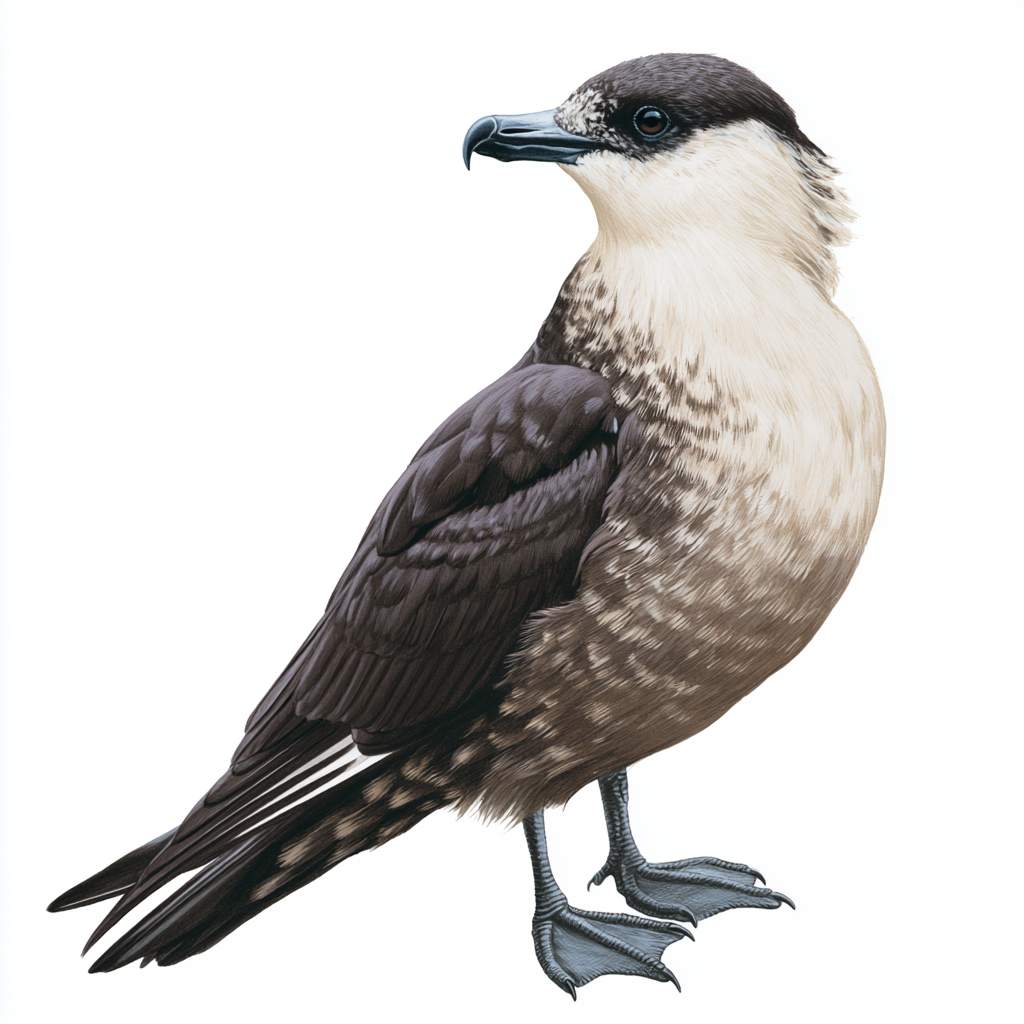
The Long-tailed Skua can be identified by its long, pointed tail, dark brown back, and white underside with a brownish breast band, as well as its distinctive white wing bars. Its slender wings and rapid wingbeats are also key features.
The Long-tailed Skua is smaller than a Herring Gull, but larger than a Black-headed Gull.
The male Long-tailed Skua has a dark brown back, white underside, and a brownish breast band, with a long, pointed tail that gives the species its name, and its plumage remains relatively consistent throughout the year.
The female Long-tailed Skua is similar to the male, with a similar dark brown back, white underside, and brownish breast band, although she may have a slightly shorter tail.
The Long-tailed Skua's call is a sharp, high-pitched "kee-kee-kee" or "kik-kik-kik", often repeated in a series.
The Long-tailed Skua is a predatory species that feeds on small birds, insects, and fish, often engaging in kleptoparasitism, where it steals food from other birds, and it is known for its agile and swift flight.
The Long-tailed Skua can be confused with the Arctic Skua, but it can be distinguished by its longer tail, more slender wings, and darker back, as well as its more rapid wingbeats and agile flight.
Quick Facts
Who's spotted this?
Loading...
Recent community sightings
Loading recent sightings...