Snow Bunting
Plectrophenax nivalis
The Snow Bunting is a rare winter visitor to Britain, typically seen in the northern and eastern parts of the country, particularly in coastal areas and fields. It is most likely to be spotted from October to March, with the majority of sightings occurring during periods of harsh weather.
Field Identification Guide
Use these features to identify Snow Bunting in the field.
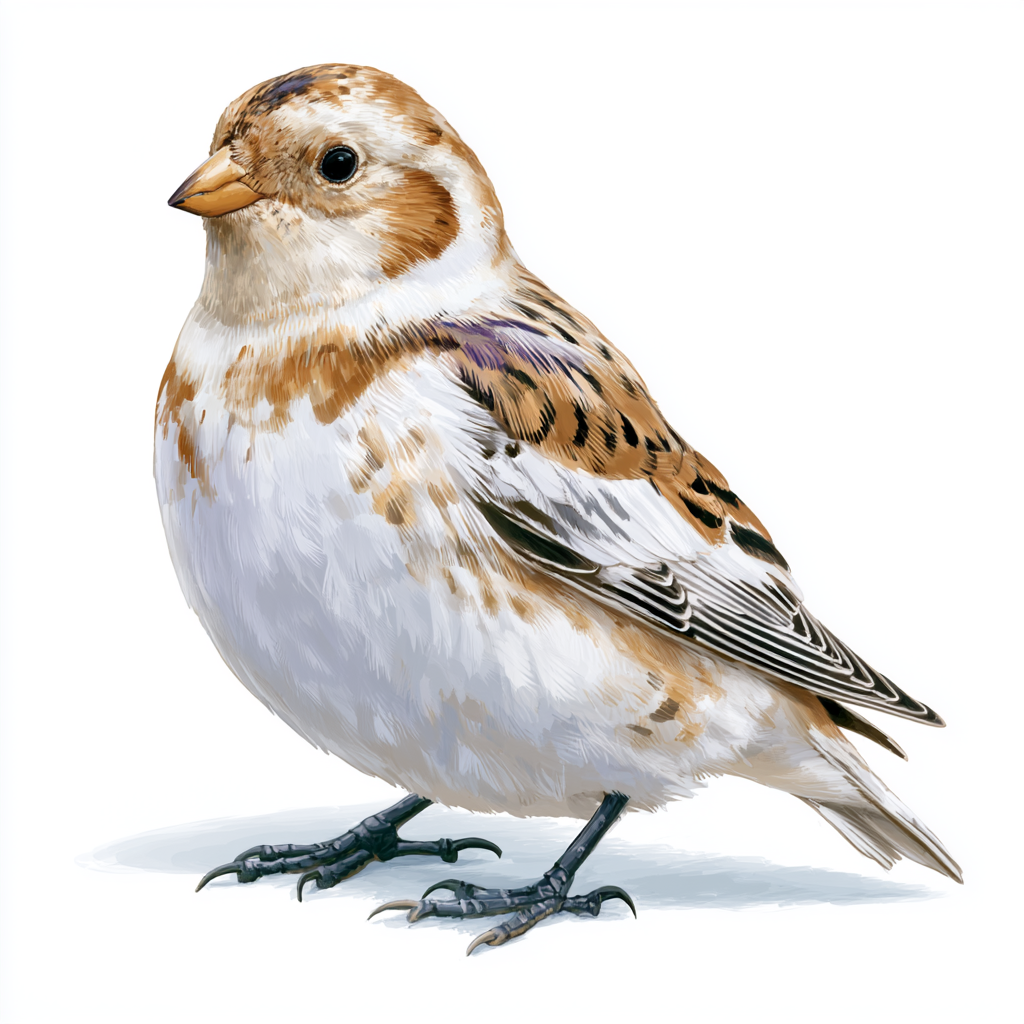
The Snow Bunting can be identified by its distinctive white plumage with black wing tips, a rounded body shape, and a short, notched tail. Its black primaries and secondaries also stand out against its otherwise white wings.
The Snow Bunting is slightly smaller than a Starling, measuring around 15-19 cm in length.
The male Snow Bunting has a predominantly white plumage with a black patch on its wings, and a black tail, with some individuals showing a slight buff or greyish tint to their feathers, particularly during the breeding season.
Similar to the male, but with a more subdued colouration, often with a brownish or greyish tint to the feathers, and a less pronounced black patch on the wings.
The Snow Bunting's call is a sharp, metallic "tik" or "tek" sound, often repeated in a series, while its song is a melodious, warbling phrase.
Snow Buntings are ground-foraging birds, often feeding on seeds, grains, and insects in open fields and coastal areas, and are known for their energetic, bouncy flight style.
The Snow Bunting can be confused with the Lapland Bunting, but can be distinguished by its white outer tail feathers, lack of a chestnut nape patch, and a more rounded body shape.
Quick Facts
Who's spotted this?
Loading...
Recent community sightings
Loading recent sightings...