Wood Warbler
Phylloscopus sibilatrix
The Wood Warbler is a rare but annual migrant to Britain, typically seen in woodland edges and clearings during spring and autumn, with the majority of sightings occurring in southern England. It is a scarce breeder in the UK, with only a handful of pairs nesting in Wales and England.
Field Identification Guide
Use these features to identify Wood Warbler in the field.
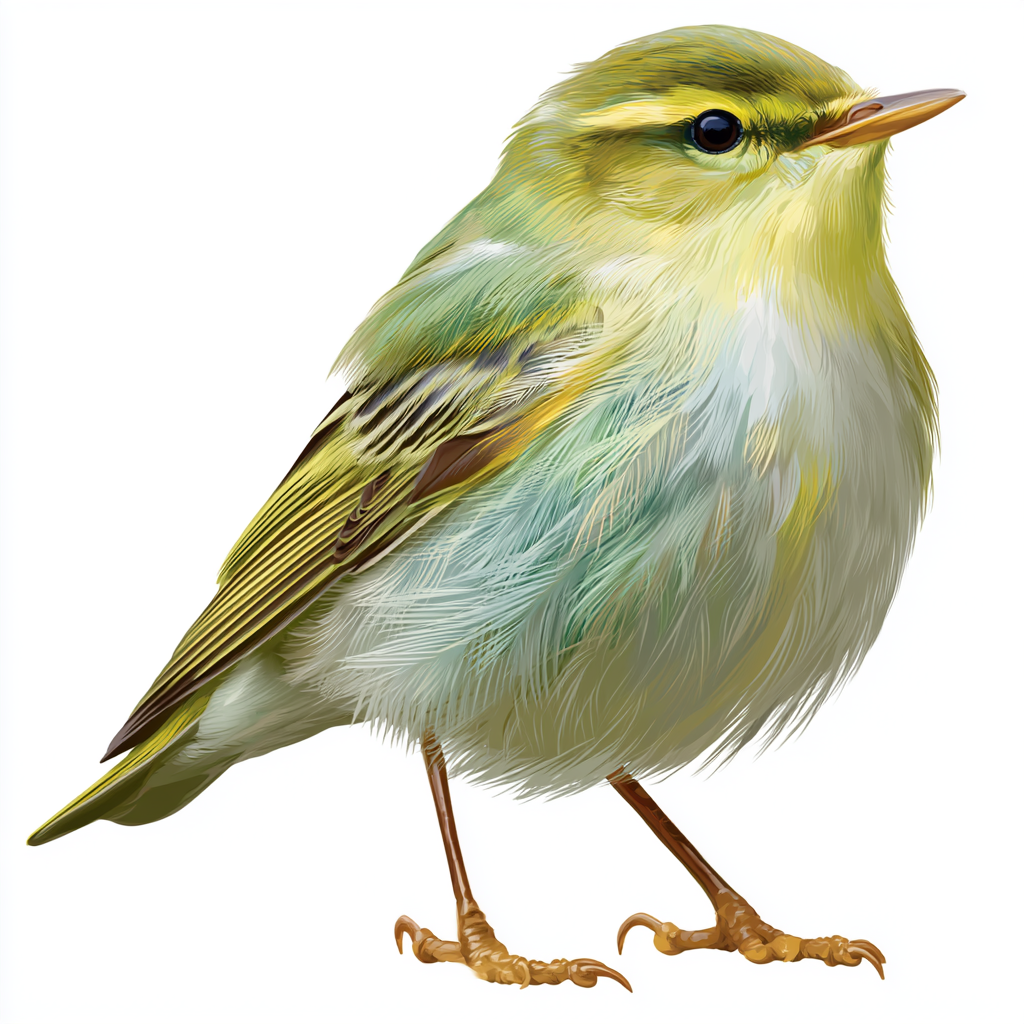
The Wood Warbler can be identified by its bright yellow throat and breast, greenish-yellow upperparts, and distinctive white eye-ring, as well as its long, broad tail and short, pointed bill. Its overall appearance is sleek and streamlined, with a subtle yellow supercilium.
The Wood Warbler is slightly smaller than a Chaffinch, measuring around 11-12 cm in length.
The male Wood Warbler has a bright yellow throat and breast, with greenish-yellow upperparts and a greyish-brown back, with a subtle yellow supercilium and white eye-ring, and its plumage remains relatively consistent throughout the year.
The female Wood Warbler is similar to the male, with slightly duller yellow tones on the throat and breast, but overall, the female's plumage is nearly indistinguishable from the male's.
The Wood Warbler's song is a melodic, whistled phrase, often described as a series of descending notes, while its call is a sharp, metallic "tic" or "tzik" sound.
Wood Warblers are active, agile birds that forage for insects and spiders in woodland undergrowth and mid-storey vegetation, often flying between trees with a swift, darting motion, and they are known to be solitary or found in small groups during migration.
The Wood Warbler can be confused with other leaf warblers, such as the Chiffchaff or the Willow Warbler, but it can be distinguished by its bright yellow throat and breast, white eye-ring, and distinctive song, as well as its more subdued, greenish-yellow upperparts.
Quick Facts
Who's spotted this?
Loading...
Recent community sightings
Loading recent sightings...