Harlequin Duck
Histrionicus histrionicus
The Harlequin Duck is a rare and occasional visitor to Britain, typically seen in coastal areas, particularly in the north and west, during the winter months or as a vagrant. It is most likely to be spotted in areas with rocky shores and strong tidal currents.
Field Identification Guide
Use these features to identify Harlequin Duck in the field.
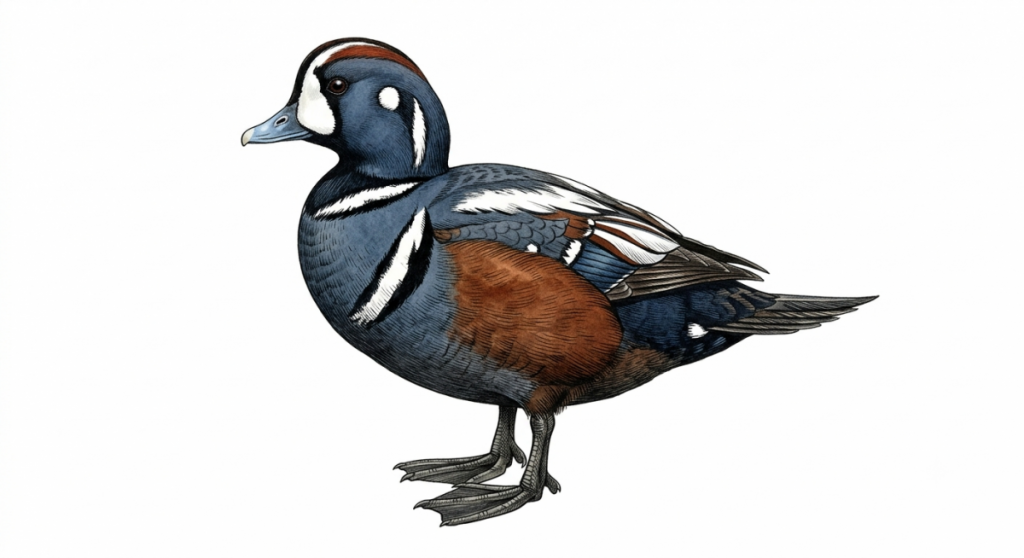
The Harlequin Duck can be identified by its distinctive blue-grey and red plumage, white eye patches, and striking black and white markings on its head and body. Its colourful and intricate patterning makes it a standout among other duck species.
The Harlequin Duck is smaller than a Mallard, approximately the size of a Teal, making it a compact and agile bird in the water.
The male Harlequin Duck has a striking plumage featuring a blue-grey back, red sides, and white patches on its face, with a distinctive black and white pattern on its head and neck, which can vary slightly depending on the season.
The female Harlequin Duck has a more subdued plumage than the male, with a brownish-grey back, grey sides, and white patches on its face, although it retains some of the male's distinctive markings, particularly the white eye patches.
The Harlequin Duck's call is a high-pitched, squeaking sound, often described as a loud, sharp "chee-chee-chee" or "squeak-squeak-squeak", which can be heard from both males and females.
Harlequin Ducks are strong and agile swimmers, feeding on small invertebrates and aquatic plants in fast-flowing coastal waters, and are often seen swimming and diving in rocky areas, as well as walking on shore and flying low over the water with rapid wingbeats.
The Harlequin Duck can be confused with other small sea ducks, such as the Long-tailed Duck or the Goldeneye, but its distinctive plumage patterns and white eye patches make it relatively easy to distinguish from these species with a closer look.
Quick Facts
Who's spotted this?
Loading...
Recent community sightings
Loading recent sightings...