Masked Shrike
Lanius nubicus
The Masked Shrike is a rare migrant to Britain, typically seen in the southern regions during the spring and autumn, with most sightings occurring in coastal areas. It is a short-range migrant that breeds in southeastern Europe and winters in northeast Africa, making it an uncommon sight in British skies.
Field Identification Guide
Use these features to identify Masked Shrike in the field.
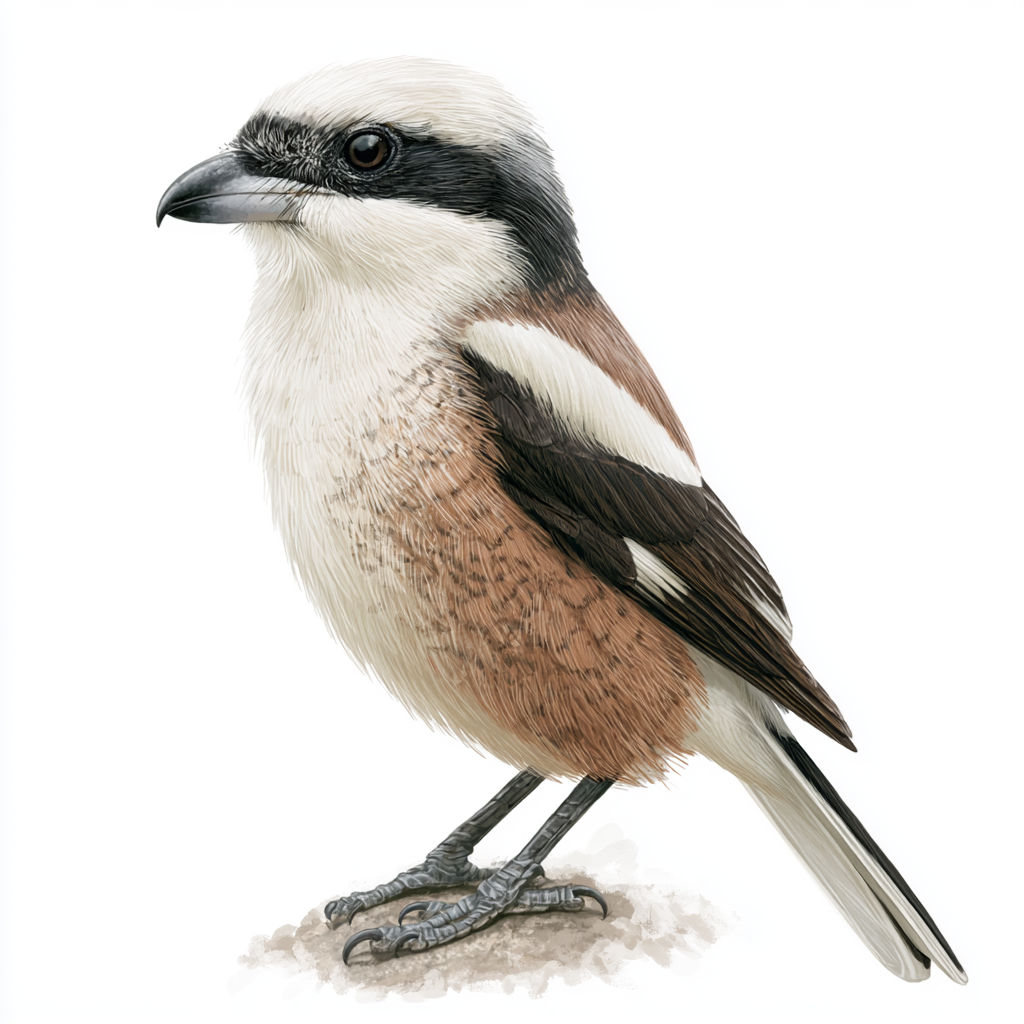
The Masked Shrike can be identified by its black upperparts, white forehead and supercilium, and large white patches on the shoulders and wings, as well as its distinctive hooked bill and long tail. Its orange flanks and breast also make it a striking sight.
The Masked Shrike is smaller than a Starling, measuring around 16-18 cm in length, making it a compact and agile bird.
The male Masked Shrike has mainly black upperparts, with white on its crown, forehead, and supercilium, and large white patches on the shoulders and wings, while its throat, neck sides, and underparts are white, with vibrant orange flanks and breast.
The female Masked Shrike is a duller version of the male, with brownish-black upperparts and a grey or buff tone to the shoulders and underparts, making it slightly less striking than its male counterpart.
The Masked Shrike's call is short and grating, while its song has melodic warbler-like components, making it a unique and interesting sound to listen for.
The Masked Shrike is a predatory bird that feeds on insects and small vertebrates, often perching on exposed branches or wires to scan for prey, and its flight style is characterized by rapid, agile movements.
The Masked Shrike can be confused with other shrike species, such as the Red-backed Shrike, but can be distinguished by its black upperparts, white forehead, and orange flanks, as well as its smaller size and more agile flight style.
Quick Facts
Who's spotted this?
Loading...
Recent community sightings
Loading recent sightings...