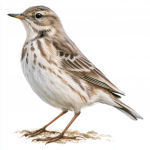
Black Kite
Milvus migrans
The Black Kite is a rare but increasing migrant visitor to Britain, typically seen during the summer months, particularly in the southern regions, with occasional sightings in other parts of the country. It is a bird of prey that can be spotted near coastal areas, estuaries, and inland wetlands.
Field Identification Guide
Use these features to identify Black Kite in the field.
The Black Kite can be identified by its dark brown plumage, forked tail, and pale panels on the underside of its wings, which are visible when in flight. Its broad wings and distinctive tail shape are also notable features.
The Black Kite is larger than a Buzzard, with a length of approximately 55-60 cm, making it a medium to large-sized bird of prey.
The male Black Kite has a dark brown plumage with a bluish-grey sheen, and a pale greyish-brown underside, with a faintly streaked breast and belly, with no significant seasonal variation.
The female Black Kite is similar to the male, with no notable differences in plumage, although juveniles may have a more streaked and mottled appearance.
The Black Kite's call is a sharp, high-pitched "pee-pee-pee" or "kee-kee-kee", often repeated in a series of short phrases.
Black Kites are opportunistic feeders, scavenging for small mammals, birds, and insects, and are known for their agile and nimble flight, often soaring and gliding with ease, as well as their habit of following other birds to feed on their prey.
The Black Kite can be confused with the Red Kite, but can be distinguished by its darker plumage, more forked tail, and pale panels on the underside of its wings, as well as its more agile and nimble flight style.
Quick Facts
Who's spotted this?
Loading...
Recent community sightings
Loading recent sightings...