Great Reed Warbler
Acrocephalus arundinaceus
The Great Reed Warbler is a rare migrant to Britain, typically seen in the summer months, particularly in wetland areas with extensive reed beds, where it can be spotted during its breeding season. It is more commonly found in mainland Europe and Western Palearctic regions, making sightings in Britain a notable event.
Field Identification Guide
Use these features to identify Great Reed Warbler in the field.
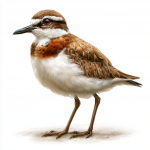
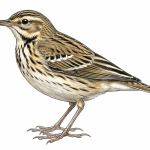
This species can be identified by its grey-brown back, white throat, and distinctive black stripe through its eye, as well as its long, rounded tail and broad wings. Its size and overall appearance are also key factors in distinguishing it from other warblers.
The Great Reed Warbler is larger than a Blue Tit, but smaller than a Starling, making it a medium-sized passerine bird.
The male Great Reed Warbler has a grey-brown back, white underside, and a black stripe that runs through its eye, with little to no seasonal variation in its plumage.
The female Great Reed Warbler is similar to the male in appearance, exhibiting the same grey-brown and white colouration, making it difficult to distinguish between the sexes based on plumage alone.
The Great Reed Warbler's song is a deep, chattering melody, often described as a low, rhythmic series of phrases, while its call is a sharp, metallic "tek" or "tchak" sound.
This species is an insectivorous bird that feeds on a variety of small insects and spiders, foraging through reed beds and dense vegetation with a deliberate, methodical flight style, often skulking and hiding in dense cover.
The Great Reed Warbler can be confused with the Reed Warbler, but can be distinguished by its larger size, longer tail, and broader wings, as well as its distinctive black stripe through its eye, which is less pronounced in the Reed Warbler.
Quick Facts
Who's spotted this?
Loading...
Recent community sightings
Loading recent sightings...