Dark-eyed Junco
Junco hyemalis
The Dark-eyed Junco is a rare winter visitor to Britain, typically seen in the southern and western regions of the country, particularly during periods of harsh weather. It is most often spotted from October to April, with sightings usually involving individual birds or small flocks.
Field Identification Guide
Use these features to identify Dark-eyed Junco in the field.
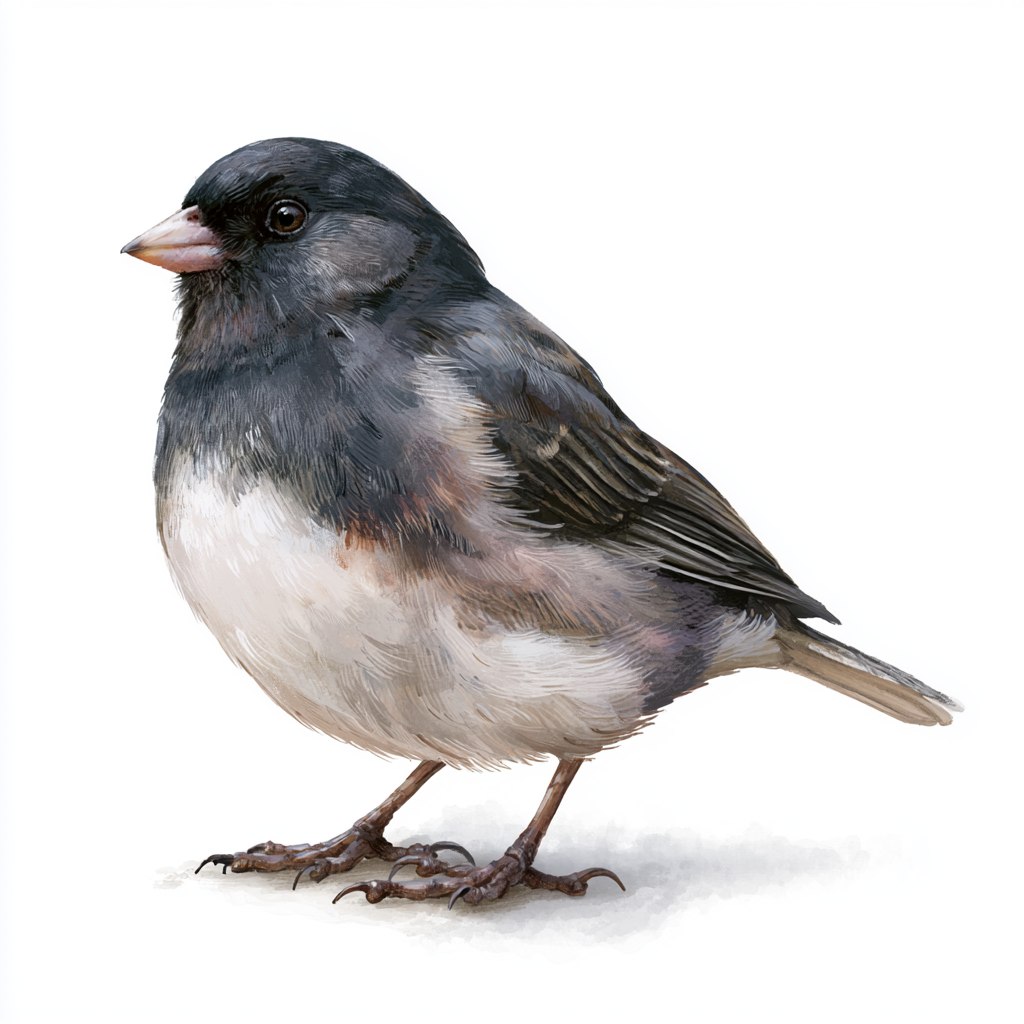
The Dark-eyed Junco can be identified by its distinctive dark hood, white outer tail feathers, and pinkish-brown bill, which distinguish it from other similar species. Its grayish-brown back and wings also help to set it apart, along with its white belly and flanks.
The Dark-eyed Junco is smaller than a Starling, measuring approximately 12-14 cm in length, and is larger than a Blue Tit.
The male Dark-eyed Junco has a slate-gray hood, brown back and wings, and a white belly, with a pinkish-brown bill, and its plumage remains relatively consistent throughout the year.
The female Dark-eyed Junco is similar to the male, but has a browner hood and a more subdued coloration overall, making it slightly less distinctive than its male counterpart.
The Dark-eyed Junco's call is a sharp, high-pitched "tik" or "tsip" sound, while its song is a musical, whistled phrase that sounds like a series of descending notes.
The Dark-eyed Junco is a ground-foraging bird that feeds on seeds, insects, and fruits, often hopping or running along the ground in search of food, and it has a distinctive flight pattern characterized by rapid, fluttering wingbeats.
The Dark-eyed Junco can be confused with the Brambling or the Chaffinch, but can be distinguished from these species by its dark hood, white outer tail feathers, and pinkish-brown bill, as well as its distinctive call and song.
Quick Facts
Who's spotted this?
Loading...
Recent community sightings
Loading recent sightings...