Brown Shrike
Lanius cristatus
The Brown Shrike is a rare migrant to Britain, typically seen during the spring and autumn, with most sightings occurring in the southern and eastern parts of the country. It is a passage migrant, with the majority of records coming from coastal areas, particularly during periods of easterly winds.
Field Identification Guide
Use these features to identify Brown Shrike in the field.
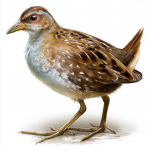
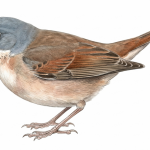
The Brown Shrike can be identified by its distinctive white eyebrow stripe, brown back, and black mask through the eye, as well as its stout bill and long, rounded tail.
The Brown Shrike is slightly smaller than a Robin, but larger than a Blue Tit.
The male Brown Shrike has a brown back, wings, and tail, with a grey crown, white eyebrow stripe, and a black mask through the eye, while the underparts are pale buff with fine brown scaling on the breast and flanks.
The female Brown Shrike is similar to the male, but with a more subdued colouration, particularly on the head and back, and a less distinct mask.
The Brown Shrike's call is a sharp, metallic "tak" or "tchak", often repeated, while its song is a series of melodic whistles and chirps.
The Brown Shrike is a predatory bird, feeding on insects, small vertebrates, and fruits, often perching on exposed branches or wires, and flying with a swift, direct flight.
The Brown Shrike can be confused with other shrike species, such as the Red-backed Shrike, but can be distinguished by its brown back and lack of a red hue, as well as its more subdued head pattern.
Quick Facts
Who's spotted this?
Loading...
Recent community sightings
Loading recent sightings...