Western Black-eared Wheatear
Oenanthe hispanica
The Western Black-eared Wheatear is a rare migrant to Britain, typically seen during the spring and autumn migration periods, often in southern and eastern coastal areas. It is a small, passerine bird that can be spotted in open, dry habitats such as heathlands and grasslands.
Field Identification Guide
Use these features to identify Western Black-eared Wheatear in the field.
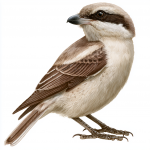
The Western Black-eared Wheatear can be identified by its black ear coverts, white throat patch, and distinctive white wing bars, which distinguish it from other wheatear species. Its grey back and wings also help to set it apart.
The Western Black-eared Wheatear is slightly smaller than a Starling, with a more slender build.
The male Western Black-eared Wheatear has a grey back and wings, with a black mask that extends from the forehead to the ear coverts, and a white throat patch and wing bars, with a buff-coloured breast and belly.
The female Western Black-eared Wheatear is similar to the male, but with a less pronounced black mask and a more subdued colouration overall.
The Western Black-eared Wheatear has a sharp, metallic call, often described as a loud "tek" or "chak" sound, and a melodic song that is typically heard during the breeding season.
The Western Black-eared Wheatear is a ground-foraging bird that feeds on insects and small invertebrates, often running or hopping across the ground in search of prey, and has a direct, swift flight style.
The Western Black-eared Wheatear can be confused with the Northern Wheatear, but can be distinguished by its black ear coverts and white throat patch, which are not found in the Northern Wheatear.
Quick Facts
Who's spotted this?
Loading...
Recent community sightings
Loading recent sightings...