Collared Flycatcher
Ficedula albicollis
The Collared Flycatcher is a rare migrant to Britain, typically seen in the spring, particularly on the southern and eastern coasts, with occasional sightings in woodland and scrub habitats. It is a species of conservation concern, with most records coming from late April to early June.
Field Identification Guide
Use these features to identify Collared Flycatcher in the field.
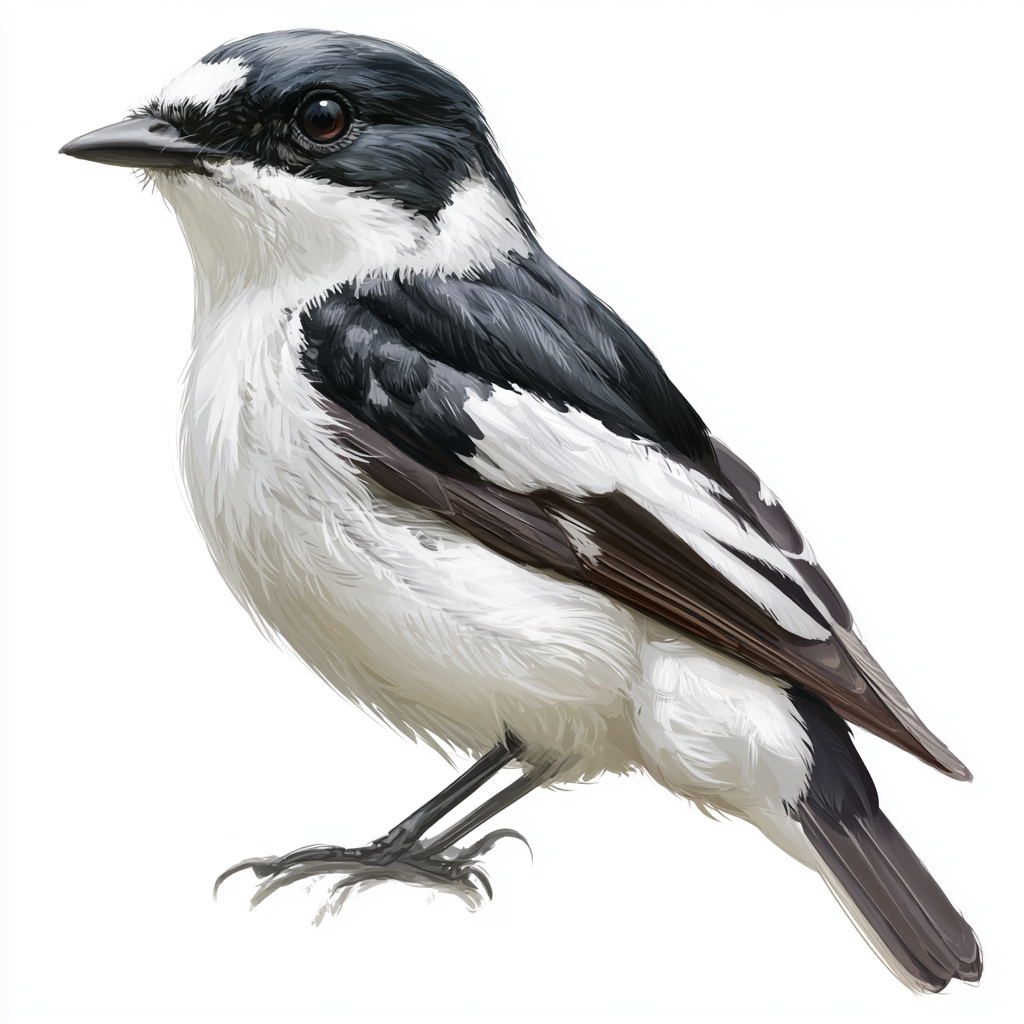
The Collared Flycatcher can be identified by its white collar patch, white forehead, and distinctive white patches on its wings, as well as its broad white wing bars and a black throat patch.
The Collared Flycatcher is slightly smaller than a House Sparrow, with a more compact build.
The male Collared Flycatcher has a glossy black back, white forehead, and a white collar patch that extends around the neck, with a black throat patch and white underparts.
The female Collared Flycatcher is similar to the male but has a brownish-grey back and a less pronounced white collar patch, with a pale throat and breast.
The Collared Flycatcher's call is a sharp, high-pitched "tick" or "tsik", while its song is a melodic, whistled phrase that sounds like "wi-tsu-wi-tsu-wi".
The Collared Flycatcher is an active, agile bird that feeds on insects in woodland and scrub habitats, often making short, swift flights to catch prey in mid-air, and frequently returning to a favourite perch.
The Collared Flycatcher can be confused with the Pied Flycatcher, but can be distinguished by its white collar patch, white forehead, and broader white wing bars, as well as its more compact build and different head pattern.
Quick Facts
Who's spotted this?
Loading...
Recent community sightings
Loading recent sightings...