Coot
Fulica atra
The Coot is a medium-sized water bird commonly seen in Britain's wetlands, lakes, and rivers throughout the year, with peak sightings during the breeding season from March to July. It is a widespread species in Britain, found in a variety of freshwater habitats, including ponds, marshes, and canals.
Field Identification Guide
Use these features to identify Coot in the field.
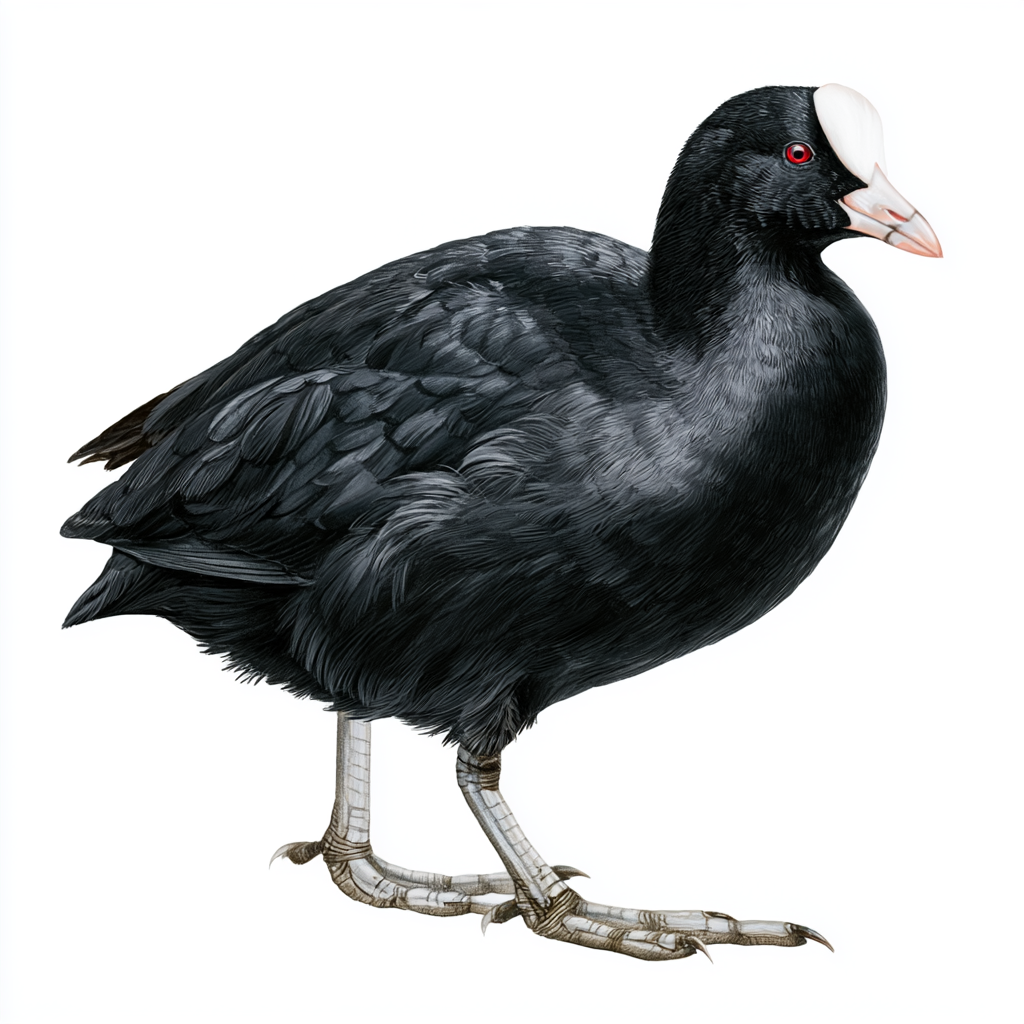
The Coot can be identified by its sleek black plumage, distinctive white bill, and reddish-brown head shield, which extends from the bill to the top of the head.
The Coot is slightly larger than a Moorhen, but smaller than a large gull, making it a medium-sized bird that is easily noticeable in its habitat.
The male Coot has a glossy black plumage with a distinctive white bill and a reddish-brown head shield, which is present throughout the year with little seasonal variation.
The female Coot is similar to the male in terms of plumage, with the same black colouration and white bill, although the head shield may be slightly less pronounced.
The Coot's call is a loud, sharp "kook" or "kuk-kuk-kuk", often repeated in a series of notes, which can be heard throughout the day, particularly during the breeding season.
Coots are omnivorous birds that feed on a variety of aquatic plants, insects, and small animals, often diving or dabbling in the water to catch their prey, and are known for their aggressive behaviour during the breeding season, when they will fiercely defend their territories.
The Coot can be confused with the Moorhen, but can be distinguished by its white bill and reddish-brown head shield, which are not present in the Moorhen, as well as its more compact body shape and shorter legs.
Quick Facts
Who's spotted this?
Loading...
Recent community sightings
Loading recent sightings...