Cuckoo
Cuculus canorus
The Cuckoo is a rare summer migrant to Britain, typically seen from April to July, and is notable for its distinctive call and parasitic breeding habits, often found in open woods, hedgerows, and wetlands. It is a scarce breeder in the UK, with most sightings occurring in southern England.
Field Identification Guide
Use these features to identify Cuckoo in the field.
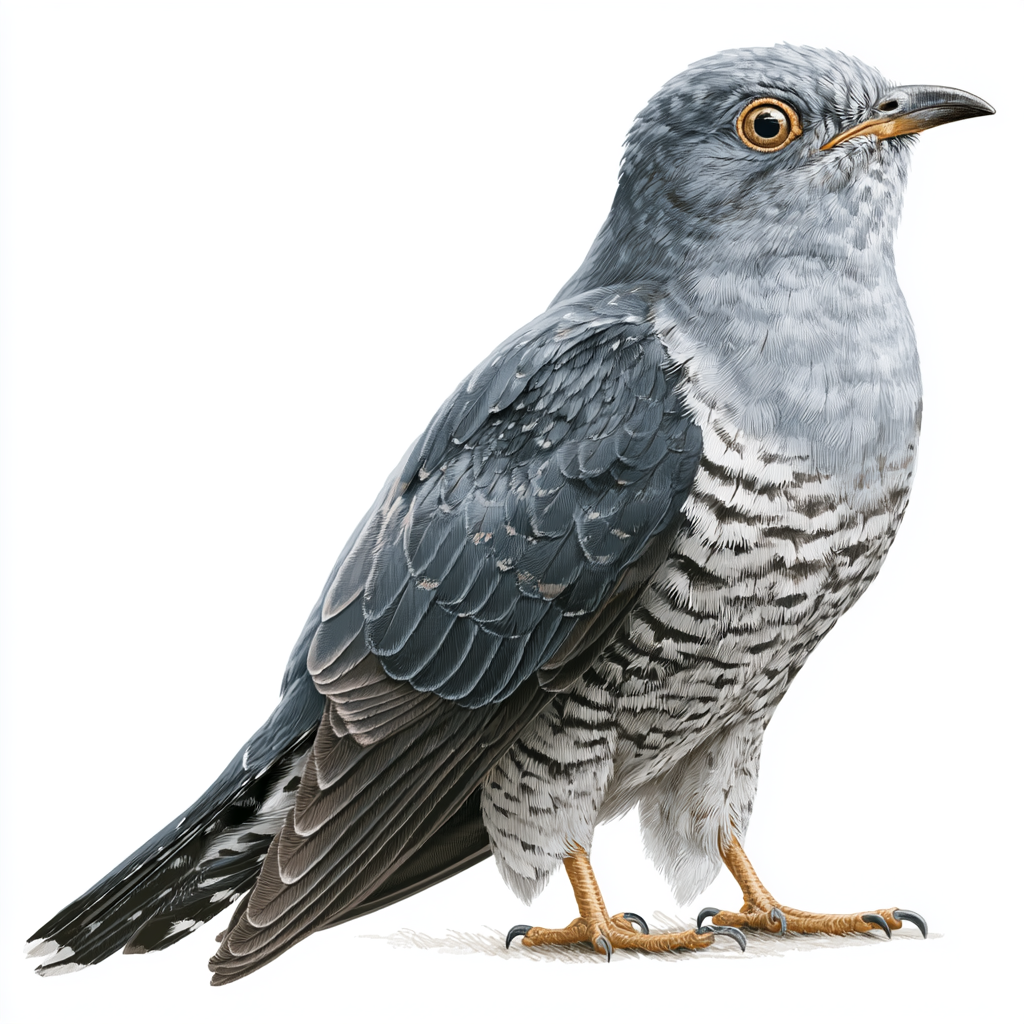
The Cuckoo can be identified by its grey-brown back, white belly, and distinctive white patches on its wings, as well as its long, pointed tail and downcurved bill. Its size and shape, combined with its striking white wing patches, make it a recognizable species.
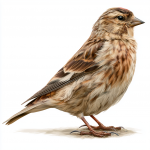
The Cuckoo is slightly larger than a Meadow Pipit, but smaller than a Crow, making it a medium-sized bird.
The male Cuckoo has a slate-grey back, wings, and tail, with a white belly and white patches on its wings, giving it a distinctive appearance, with little seasonal variation.
The female Cuckoo is similar to the male, but has a browner tinge to her back and wings, and may have a more barred appearance on her belly.
The Cuckoo's call is a distinctive, repetitive "cuck-oo" or "coo-coo" sound, often heard in the spring and early summer, with the male's call being a classic sign of its presence.
The Cuckoo is a brood parasite, laying its eggs in the nests of other birds, and its feeding behaviour involves catching insects and spiders in mid-air, with a swift and direct flight style.
The Cuckoo can be confused with the Sparrowhawk, but can be distinguished by its larger size, longer tail, and distinctive white wing patches, as well as its unique call and feeding behaviour.
Quick Facts
Who's spotted this?
Loading...
Recent community sightings
Loading recent sightings...