Eleonora’s Falcon
Falco eleonorae
Eleonora's Falcon is a rare migrant to Britain, typically seen during the autumn months, and is most notable for its unique breeding habits and late nesting schedule. It can be spotted in coastal areas, particularly in the southwest of England, although sightings are extremely rare and often associated with exceptional weather conditions.
Field Identification Guide
Use these features to identify Eleonora’s Falcon in the field.
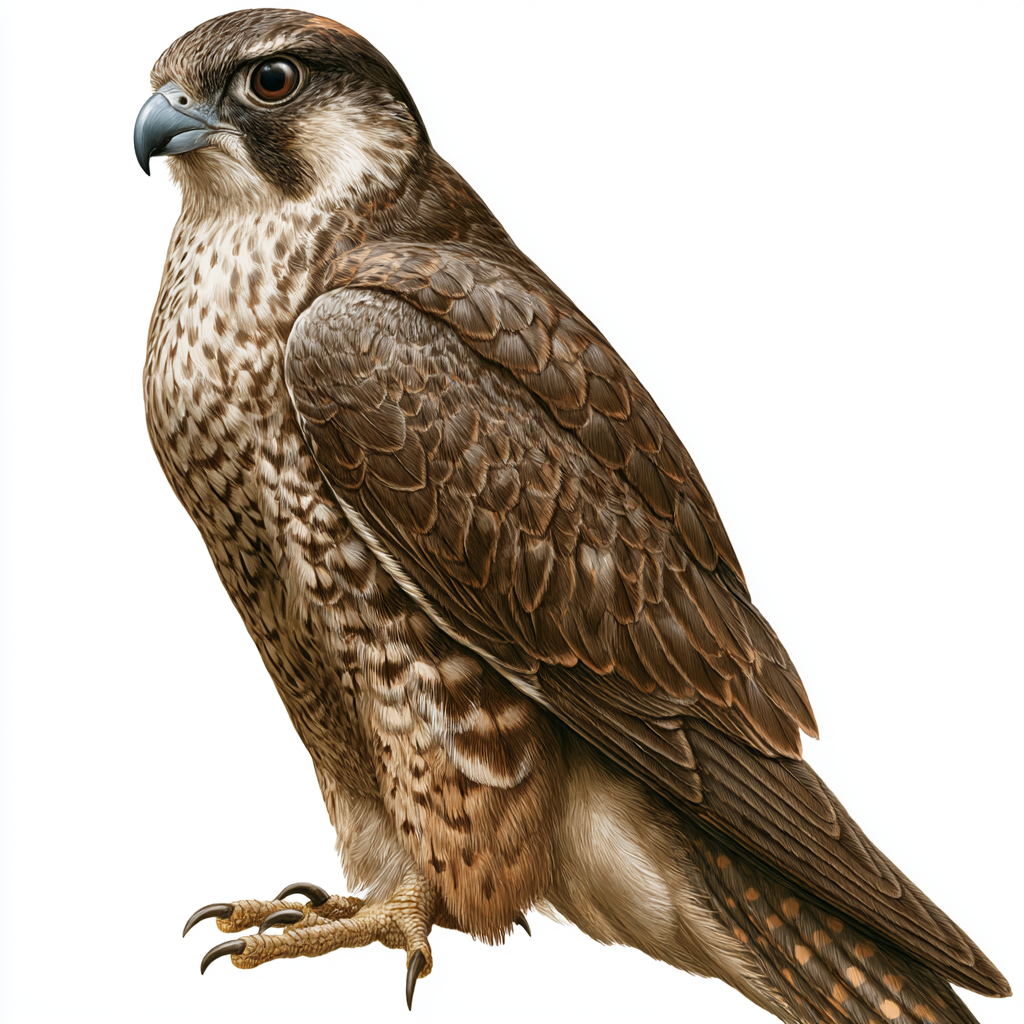
The Eleonora's Falcon can be identified by its slate-grey back, white underside, and black hood, as well as its long, pointed wings and tail. Its overall shape and size, combined with a distinctive black underside to the primaries, help distinguish it from other falcon species.
The Eleonora's Falcon is slightly larger than a Hobby, with a similar sleek and agile build, making it a medium-sized falcon.
The male Eleonora's Falcon has a slate-grey back, white underside, and a black hood that extends to the moustachial stripe, with a bluish-grey tint to the crown and nape.
Similar to the male, the female Eleonora's Falcon has a slightly browner tint to the back and wings, but overall, the plumage is similar, with a pale underside and a black hood.
The Eleonora's Falcon has a sharp, high-pitched call, often described as a loud, repetitive "kek-kek-kek" or "chee-chee-chee", typically used for contact and alarm.
Eleonora's Falcons are skilled hunters, feeding on small to medium-sized birds, bats, and insects, which they catch in mid-air with their long, pointed wings and agile flight. They are known for their late breeding schedule, nesting in large colonies on coastal cliffs and islands.
The Eleonora's Falcon can be confused with the Hobby or the Sooty Falcon, but can be distinguished by its larger size, black hood, and slate-grey back, as well as its distinctive call and late nesting schedule.
Quick Facts
Who's spotted this?
Loading...
Recent community sightings
Loading recent sightings...