Great Knot
Calidris tenuirostris
The Great Knot is a rare migrant to Britain, typically seen during the spring and autumn migrations, often in small numbers at coastal wetlands and estuaries. It is most likely to be spotted by keen-eyed birders at key stopover sites, particularly on the east coast.
Field Identification Guide
Use these features to identify Great Knot in the field.
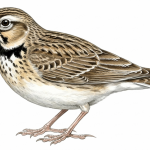
The Great Knot can be identified by its grey-brown plumage, long legs, and distinctive black stripe running across its forehead, as well as its relatively large size and long bill. Its upperparts are mottled brown, helping it blend in with its surroundings.
The Great Knot is slightly larger than a Dunlin, but smaller than a Redshank, making it a medium-sized wader that stands out in a crowd.
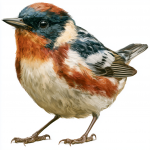
The male Great Knot has a breeding plumage of chestnut-brown upperparts and white underparts, with a black stripe across its forehead, while in non-breeding plumage it is more subdued, with grey-brown upperparts and pale underparts.
The female Great Knot is similar to the male, although the breeding plumage may be slightly less intensely coloured, and the non-breeding plumage is virtually indistinguishable.
The Great Knot has a sharp, metallic call, often transcribed as a loud "kek" or "kik", which is frequently heard during migration and at breeding sites.
The Great Knot is a migratory species that feeds on small invertebrates, such as molluscs and crustaceans, probing into mud and sand with its long bill, and is known for its long-distance flights, often travelling in large flocks.
The Great Knot can be confused with other large Calidris species, such as the Curlew Sandpiper, but can be distinguished by its larger size, longer bill, and distinctive black forehead stripe, as well as its more subdued breeding plumage.
Quick Facts
Who's spotted this?
Loading...
Recent community sightings
Loading recent sightings...