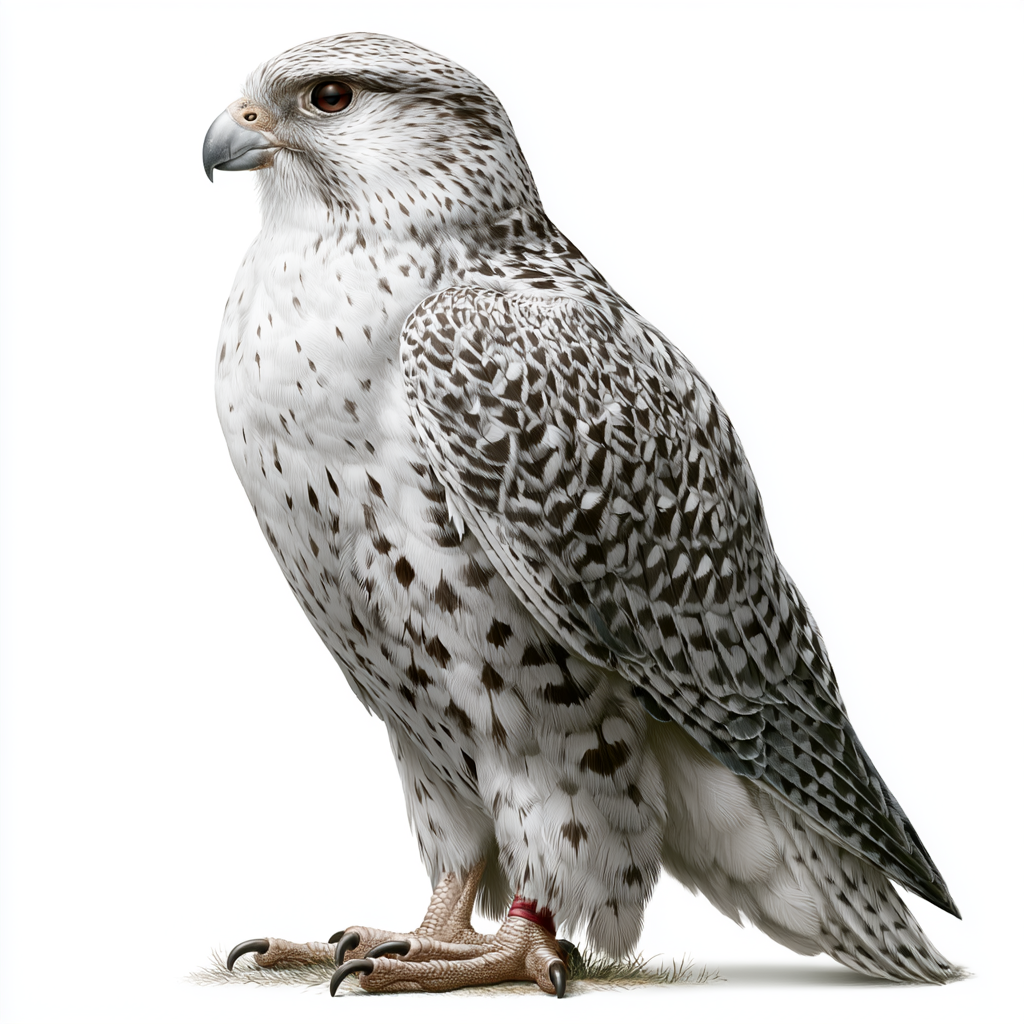
Gyrfalcon
Falco rusticolus
The Gyrfalcon is a rare but impressive visitor to Britain, typically seen in the northern and eastern parts of the country, particularly during the winter months. It is a high-latitude species that breeds in the Arctic regions, making sightings in Britain a notable event.
Field Identification Guide
Use these features to identify Gyrfalcon in the field.
At a glance, the Gyrfalcon can be identified by its large size, broad wings, and distinctive white or dark grey-brown plumage, which can vary depending on the location and morph. Its wings and tail are long and rounded, with a distinctive shape that sets it apart from other falcons.
The Gyrfalcon is larger than a Peregrine Falcon, with females being significantly bigger than males, making it one of the largest birds of prey in the British skies.
The male Gyrfalcon's plumage can range from a pale grey-white to a dark grey-brown, with individuals exhibiting varying degrees of colouration depending on their geographic origin and morph.
Similar to the male, but often larger and with a more pronounced colouration, females can display a wider range of plumage variations, from all-white to dark grey-brown.
The Gyrfalcon's call is a loud, sharp "kek-kek-kek" or a high-pitched "eeeee", often heard when birds are in flight or interacting with each other.
Gyrfalcons are skilled hunters that feed on a variety of prey, including birds, mammals, and fish, using their speed and agility to catch their quarry in mid-air or on the ground. They are also known for their impressive diving displays, reaching high speeds as they stoop in pursuit of prey.
The Gyrfalcon can be confused with the Peregrine Falcon, but can be distinguished by its larger size, broader wings, and more varied plumage, as well as its more sluggish and powerful flight style, which sets it apart from the faster and more agile Peregrine.
Quick Facts
Who's spotted this?
Loading...
Recent community sightings
Loading recent sightings...