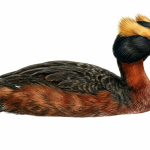
Icterine Warbler
Hippolais icterina
The Icterine Warbler is a rare migrant to Britain, typically seen during the spring and autumn migration periods, particularly in the eastern and southern regions. It is most often encountered in woodland edges, scrub, and gardens with dense vegetation.
Field Identification Guide
Use these features to identify Icterine Warbler in the field.
This species can be identified by its greenish-yellow plumage, distinctive white eye-ring, and long, broad tail. Its rounded head and short, pointed bill are also notable features.
The Icterine Warbler is slightly larger than a Blue Tit, but smaller than a Starling.
The male Icterine Warbler has a bright greenish-yellow plumage with a yellowish tint on the breast and belly, and a greyish-green back and wings.
The female plumage is similar to the male's, with a slightly duller tone, but the difference is not pronounced.
The Icterine Warbler's call is a sharp, metallic "tek" or "tink" sound, while its song is a melodic, whistled phrase with a repetitive pattern.
Icterine Warblers are active foragers, feeding on insects and spiders in dense vegetation, and are known for their agile, acrobatic movements as they flit between branches.
The Icterine Warbler can be confused with the Melodious Warbler, but can be distinguished by its brighter, more yellowish plumage and distinctive white eye-ring, as well as its sharper, more metallic call.
Quick Facts
Who's spotted this?
Loading...
Recent community sightings
Loading recent sightings...