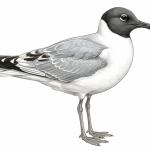
Bittern
Botaurus stellaris
The Bittern is a rare and secretive heron species in Britain, typically seen in wetland areas with dense vegetation, particularly in the spring and summer months when males are most active. It is a migratory bird, with the majority of the British population consisting of wintering individuals from continental Europe.
Field Identification Guide
Use these features to identify Bittern in the field.
The Bittern can be identified by its stout body, long neck, and distinctive yellow-buff plumage with dark brown streaks on its back and wings, as well as its distinctive leg and foot structure. Its overall shape and size, combined with its furtive behaviour, make it a unique sight in British wetlands.
The Bittern is slightly larger than a Grey Heron, but smaller than a Great Egret, with a length of approximately 69-81 cm.
The male Bittern has a distinctive yellow-buff plumage with dark brown streaks on its back and wings, and a black crown and neck stripe, with some individuals showing a pale yellow throat patch.
The female Bittern is similar to the male, but tends to have a more subdued colouration, with less distinct streaking on the back and wings.
The Bittern's call is a deep, booming "boom" sound, often described as sounding like a distant foghorn, and is typically heard at dawn and dusk during the breeding season.
Bitterns are secretive and skulking birds, typically feeding on fish, frogs, and other small aquatic animals in dense wetland vegetation, and are known for their slow and deliberate flight style, often with their neck retracted.
The Bittern can be confused with other heron species, such as the Grey Heron or the Little Egret, but can be distinguished by its distinctive plumage patterns, stout body, and booming call, as well as its preference for dense wetland habitats.
Quick Facts
Who's spotted this?
Loading...
Recent community sightings
Loading recent sightings...