Lesser Black-backed Gull
Larus fuscus
The Lesser Black-backed Gull is a common sight in Britain, particularly during the breeding season when it can be found along the Atlantic and Arctic coasts, and in winter when it migrates to the southern parts of the country. It is a frequent visitor to coastal areas, beaches, and urban spaces, especially in the British Isles.
Field Identification Guide
Use these features to identify Lesser Black-backed Gull in the field.
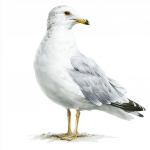
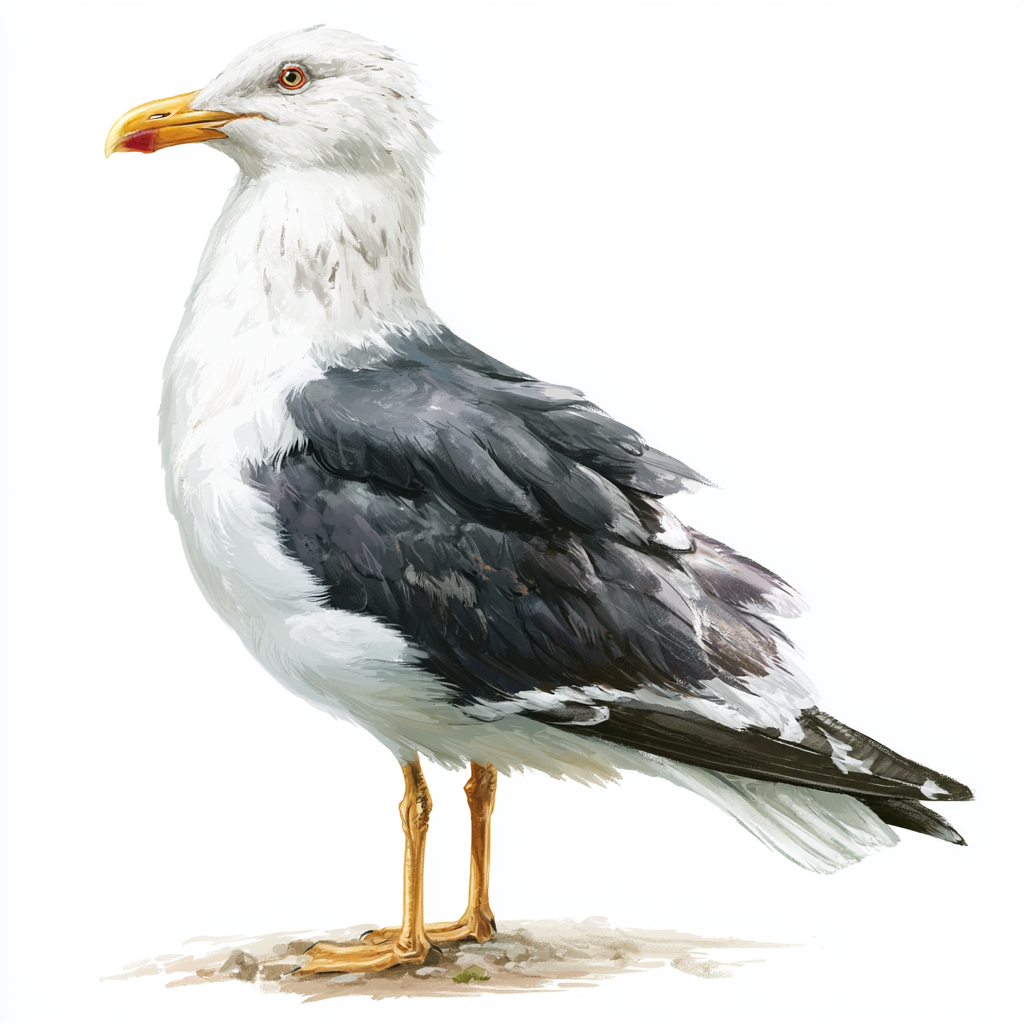
This species can be identified by its slate-grey back, white head and body, and yellow legs, as well as its distinctive wingtips which are black with white spots, and a thick, yellow bill with a red spot on the lower mandible.
The Lesser Black-backed Gull is larger than a Herring Gull, but smaller than a Great Black-backed Gull, with a length of around 53-67 cm.
The male Lesser Black-backed Gull has a slate-grey back and wings, with a white head, neck, and underparts, and yellow legs, with no significant seasonal variation in plumage.
The female plumage is similar to the male, with no notable differences in colour or pattern.
The call of the Lesser Black-backed Gull is a loud, harsh "kraa" or "ga-ga-ga", often repeated in a series of three or four notes.
Lesser Black-backed Gulls are opportunistic feeders, scavenging for food on beaches, in fields, and in urban areas, and are known for their bold and aggressive behaviour, particularly when competing for food or defending their young.
The Lesser Black-backed Gull can be confused with the Herring Gull, but can be distinguished by its darker grey back and yellow legs, whereas the Herring Gull has a pale grey back and pinkish legs, and the Great Black-backed Gull is larger with a more massive build.
Quick Facts
Who's spotted this?
Loading...
Recent community sightings
Loading recent sightings...