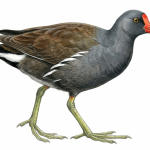
Turnstone
Arenaria interpres
The Turnstone is a medium-sized wading bird that can be seen in Britain, particularly during its migration periods, with sightings more common on coastal areas and estuaries. It is a regular winter visitor to Britain, with some individuals remaining on the coast throughout the year.
Field Identification Guide
Use these features to identify Turnstone in the field.
The Turnstone can be identified by its distinctive black and white markings, stout body, and short, black legs, as well as its unique habit of turning over stones and other objects to search for food. Its black and white pattern, including a black breast band and white belly, is also a key identification feature.
The Turnstone is slightly smaller than a Starling, with a length of approximately 21-24 cm.
The male Turnstone has a breeding plumage characterized by a black breast band, white belly, and reddish-brown feathers on its back and wings, with a seasonal variation to a more subdued greyish-brown plumage in winter.
The female Turnstone's plumage is similar to the male's, although it may be slightly duller in colour, particularly in the breeding season.
The Turnstone's call is a loud, sharp "tuk-tuk-tuk" or "te-tuk", often repeated in a series of three or four notes.
Turnstones are known for their unique feeding behaviour, which involves turning over stones, shells, and other objects to search for small invertebrates and other prey, and they can also be seen flying in flocks, often with a swift, direct flight style.
The Turnstone can be confused with other wading birds, such as the Purple Sandpiper or the Dunlin, but it can be distinguished by its distinctive black and white markings, stout body, and unique feeding behaviour.
Quick Facts
Who's spotted this?
Loading...
Recent community sightings
Loading recent sightings...