Lesser Yellowlegs
Tringa flavipes
The Lesser Yellowlegs is a rare migrant to Britain, typically seen on coastal wetlands and estuaries during the autumn migration period. It is a medium-sized shorebird that is more commonly associated with its North American breeding grounds, making sightings in Britain a notable event.
Field Identification Guide
Use these features to identify Lesser Yellowlegs in the field.
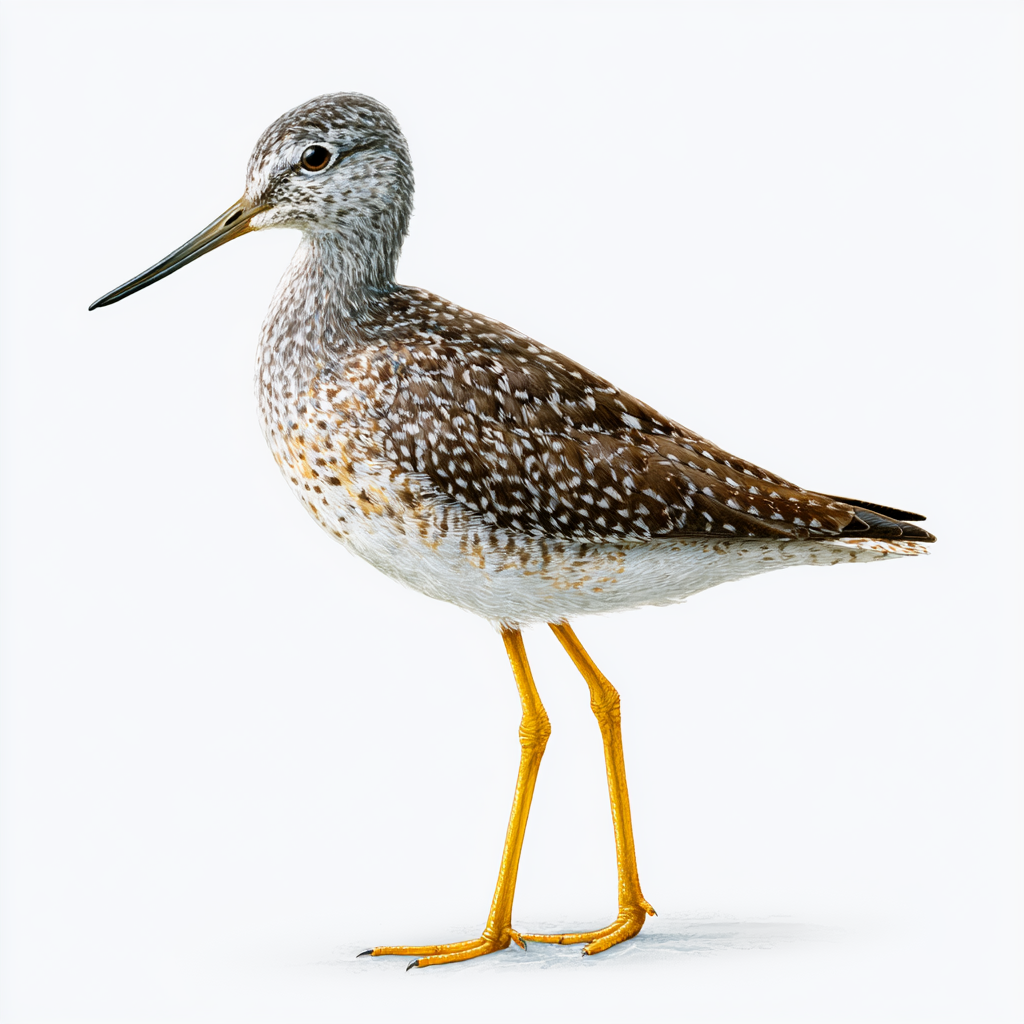
The Lesser Yellowlegs can be identified by its yellow legs, long, straight bill, and distinctive white rump patch, which are visible at a glance. Its overall grey-brown plumage and white underside also help to distinguish it from other shorebirds.
The Lesser Yellowlegs is slightly larger than a Redshank, but smaller than a Grey Plover, making it a medium-sized shorebird.
The male Lesser Yellowlegs has a grey-brown back and wings, with a white underside and a white rump patch, and its plumage does not vary significantly with the seasons.
The female Lesser Yellowlegs is similar to the male, with no significant differences in plumage.
The Lesser Yellowlegs has a distinctive, high-pitched "tu-tu-tu" call, often repeated in a series of three or four notes.
The Lesser Yellowlegs is a probing feeder, using its long bill to search for small invertebrates in mud and shallow water, and it is often seen running or walking slowly while foraging.
The Lesser Yellowlegs can be confused with the Greater Yellowlegs, but it is smaller and has a shorter, more straight bill, and its legs are also brighter yellow.
Quick Facts
Who's spotted this?
Loading...
Recent community sightings
Loading recent sightings...