Mute Swan
Cygnus olor
The Mute Swan is a common and iconic species in Britain, often seen on lakes, rivers, and wetlands throughout the year, particularly in England and Wales. It is a resident breeder and a familiar sight in many British waterways, with large populations found in urban and rural areas.
Field Identification Guide
Use these features to identify Mute Swan in the field.
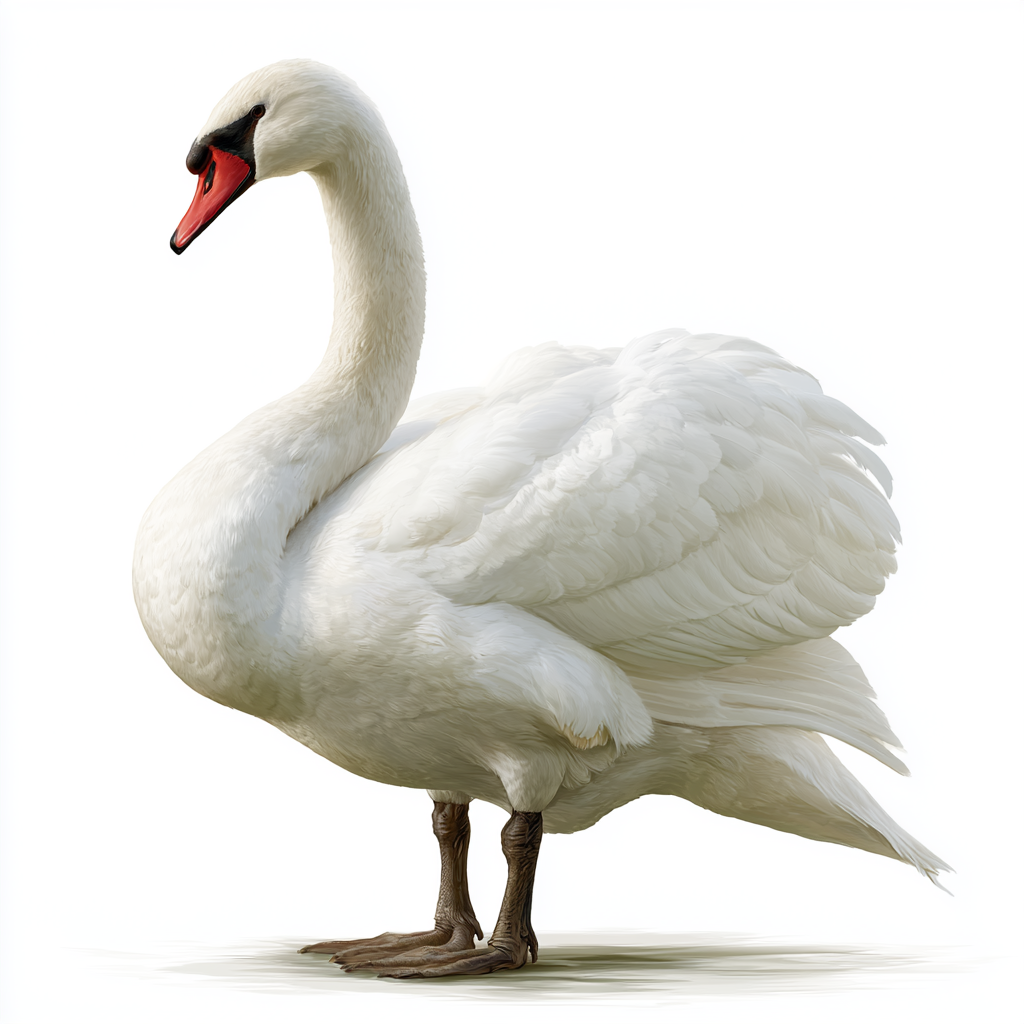
The Mute Swan is recognisable by its wholly white plumage, orange beak with a black border, and a distinctive knob atop the beak, which is larger in males. Its size and graceful neck also make it a distinctive sight, with a broad, rounded body and long neck.
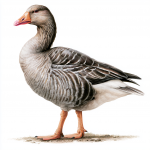
The Mute Swan is a large bird, significantly larger than a Greylag Goose and one of the biggest waterfowl species in Britain, measuring between 140 to 160 cm in length.
The male Mute Swan has a pure white plumage, with an orange beak bordered with black, and a prominent knob atop the beak, which becomes more pronounced during the breeding season.
The female Mute Swan is similar to the male, with the same white plumage and orange beak, although the knob on the beak is generally smaller than in males.
The Mute Swan is relatively quiet, making mostly soft grunting and hissing sounds, although it can produce a loud, trumpeting call when alarmed or defending its territory.
Mute Swans are herbivores, feeding on aquatic plants, grasses, and grains, and are often seen grazing on land or swimming in shallow water, with a distinctive slow and deliberate flight style, often with neck extended.
The Mute Swan can be confused with other swan species, such as the Whooper Swan or Bewick's Swan, but can be distinguished by its orange beak with a black border, and the presence of a knob atop the beak, which is larger in males, as well as its wholly white plumage and larger size.
Quick Facts
Who's spotted this?
Loading...
Recent community sightings
Loading recent sightings...