Pacific Golden Plover
Pluvialis fulva
The Pacific Golden Plover is a rare but occasional migrant to Britain, typically seen during the autumn, with most sightings occurring on the eastern and western coasts. It can be spotted on a variety of habitats, including estuaries, mudflats, and coastal wetlands, usually between July and November.
Field Identification Guide
Use these features to identify Pacific Golden Plover in the field.
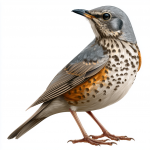
The Pacific Golden Plover can be identified by its golden-brown plumage, black axillary feathers, and distinctive black stripe that runs across its forehead, with a white stripe above it. Its relatively long legs and straight black bill are also notable features.
The Pacific Golden Plover is slightly larger than a Ringed Plover, but smaller than a Grey Plover, making it a medium-sized shorebird.
The male Pacific Golden Plover has a distinctive breeding plumage, characterized by a dark brown back and wings, with a golden-brown crown, nape, and underparts, which fades to a more subdued grey-brown in its non-breeding plumage.
The female Pacific Golden Plover is similar to the male, but with a slightly duller colouration, and a less pronounced black stripe across its forehead.
The Pacific Golden Plover's call is a sharp, whistled "chu-wee" or "whi-whi-whi", often repeated in a series of three or four notes.
The Pacific Golden Plover is a ground-foraging bird, using its straight bill to probe for small invertebrates, crustaceans, and worms in mud and sand, and is known for its swift and direct flight style.
The Pacific Golden Plover can be confused with the European Golden Plover, but can be distinguished by its more golden-brown plumage, darker axillary feathers, and a less rounded wing tip, as well as its more slender build and longer legs.
Quick Facts
Who's spotted this?
Loading...
Recent community sightings
Loading recent sightings...