Terek Sandpiper
Xenus cinereus
The Terek Sandpiper is a rare migrant to Britain, typically seen during the spring and autumn migrations, often in coastal wetlands and estuaries. It is a small, energetic wader that can be glimpsed in the UK, particularly in the eastern and southern regions.
Field Identification Guide
Use these features to identify Terek Sandpiper in the field.
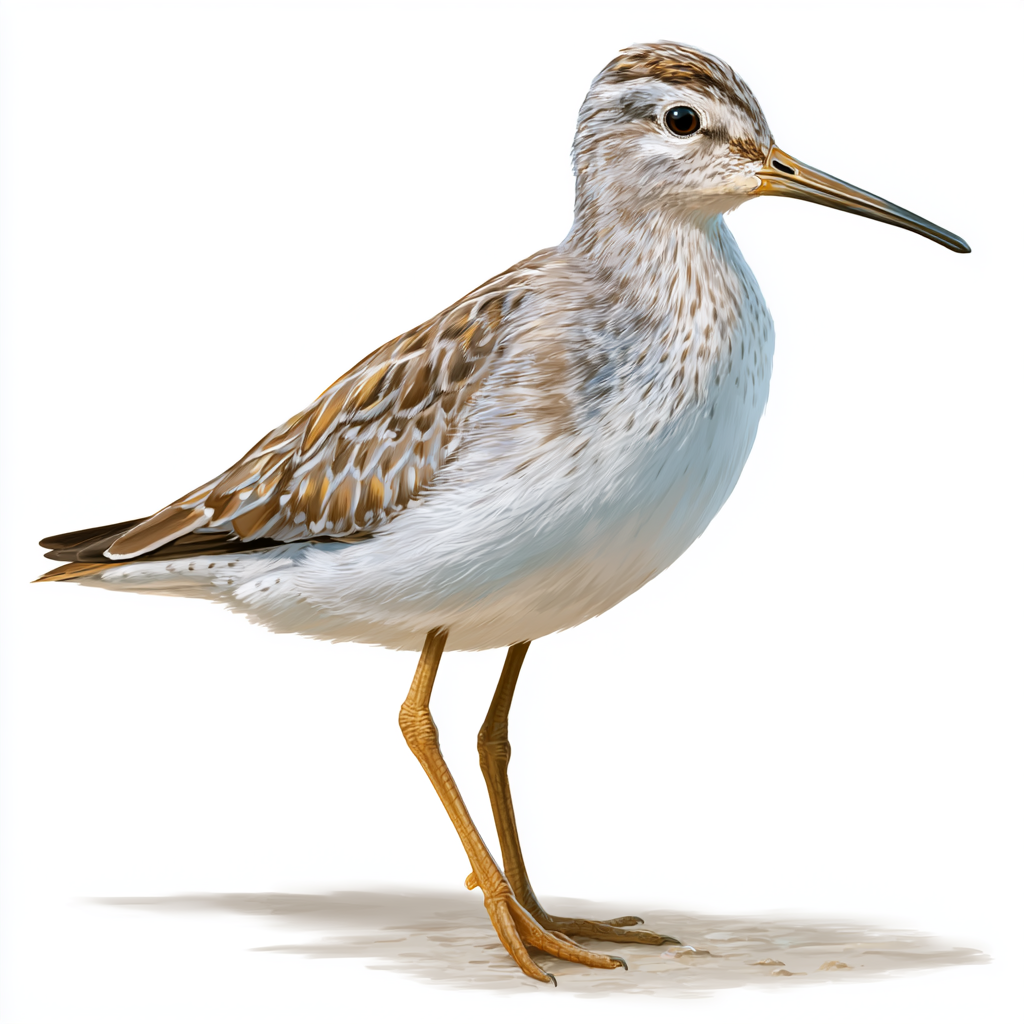
The Terek Sandpiper can be identified by its distinctive upturned bill, grey-brown plumage, and white underside with dark streaks, as well as its long, yellowish-green legs.
The Terek Sandpiper is smaller than a Starling, measuring around 20-24 cm in length.
The male Terek Sandpiper has a grey-brown back and wings, with a white belly and dark streaks on its breast and flanks, with little seasonal variation in its plumage.
The female Terek Sandpiper is similar to the male, with no significant differences in plumage.
The Terek Sandpiper's call is a sharp, high-pitched "tik" or "tek" sound, often repeated in a series.
The Terek Sandpiper is a probing feeder, using its upturned bill to search for small invertebrates in mud and sand, and is known for its energetic, erratic flight style.
The Terek Sandpiper can be confused with other small waders, such as the Common Sandpiper, but can be distinguished by its upturned bill and distinctive leg colour, as well as its more energetic and erratic behaviour.
Quick Facts
Who's spotted this?
Loading...
Recent community sightings
Loading recent sightings...