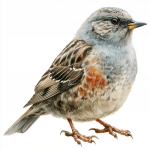
Tree Swallow
Tachycineta bicolor
The Tree Swallow is a rare migrant to Britain, with most sightings occurring during spring and autumn, particularly in the southern and eastern regions. It is more commonly found in its breeding grounds in North America, but occasional individuals may be spotted in the UK, often in association with other swallow species.
Field Identification Guide
Use these features to identify Tree Swallow in the field.
The Tree Swallow can be identified by its glossy blue-green upperparts, white underparts, and distinctive blackish wings and tail, with a black bill and dark brown eyes. Its overall appearance is sleek and streamlined, with a forked tail and long, pointed wings.
The Tree Swallow is slightly smaller than a House Martin, with a length of around 12-13 cm, making it a compact and agile bird in flight.
The male Tree Swallow has a striking plumage, with glossy blue-green upperparts, white underparts, and a blackish wings and tail, giving it a sleek and iridescent appearance, with minimal seasonal variation.
The female Tree Swallow is generally duller than the male, with a more subdued blue-green sheen to its upperparts, and may retain some brown feathers, particularly in its first year, making it slightly more difficult to distinguish from other swallow species.
The Tree Swallow's call is a sharp, high-pitched "chip" or "tweet", often repeated in a series, while its song is a more melodic, whistled phrase, typically given by males during the breeding season.
Tree Swallows are aerial feeders, catching insects in mid-air with their long, pointed wings and agile flight, often in association with other swallow species, and are known for their acrobatic abilities and swift, darting movements.
The Tree Swallow may be confused with other swallow species, such as the Barn Swallow or the Sand Martin, but can be distinguished by its glossy blue-green upperparts, white underparts, and blackish wings and tail, as well as its more compact size and distinctive call.
Quick Facts
Who's spotted this?
Loading...
Recent community sightings
Loading recent sightings...