Sora
Porzana carolina
The Sora is a rare migrant to Britain, typically seen during the autumn months, and is most likely to be spotted in wetland areas, particularly in the southern and eastern regions of the country. It is a small, secretive bird that can be difficult to locate, even for experienced birdwatchers.
Field Identification Guide
Use these features to identify Sora in the field.
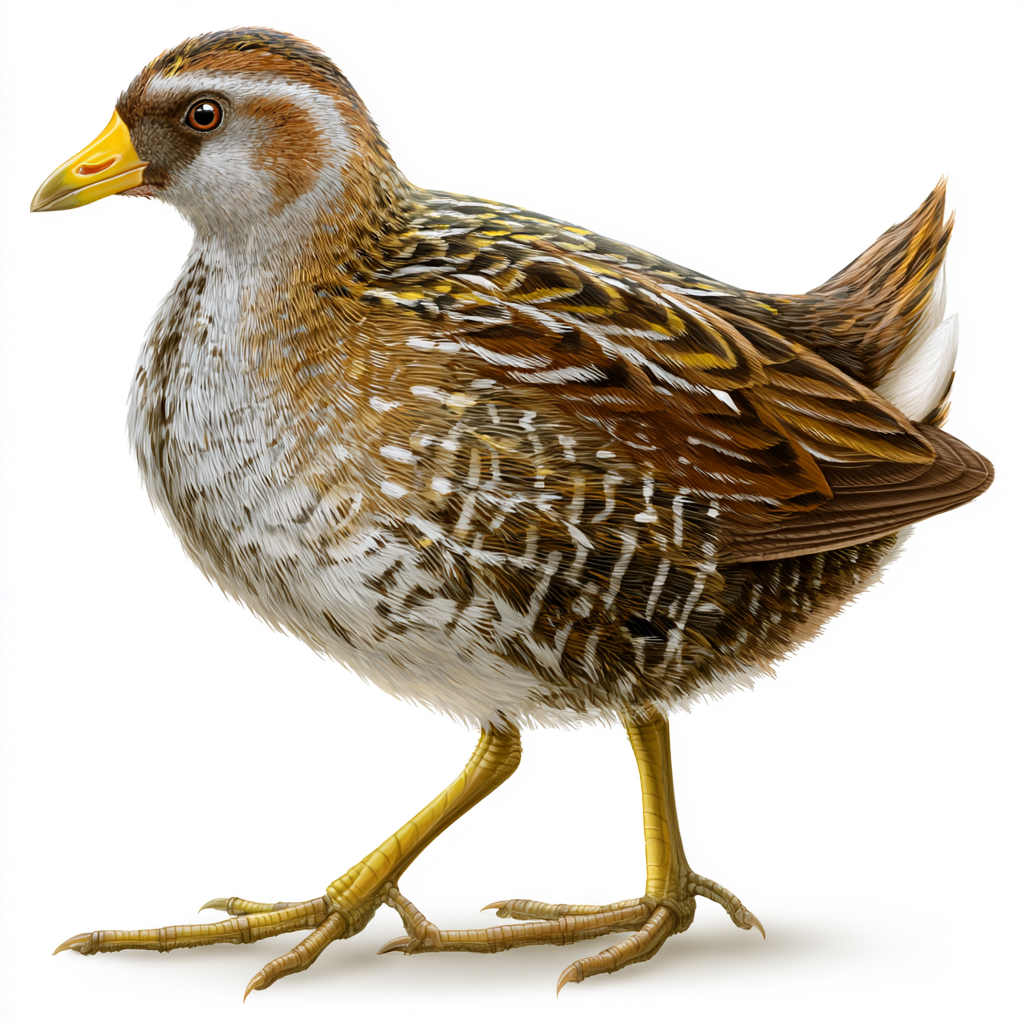
The Sora can be identified by its distinctive black face mask, grey breast, and brown back, as well as its relatively small size and long, yellow bill. Its overall appearance is also characterized by a rounded body and long legs.
The Sora is smaller than a Moorhen, but larger than a Water Rail, making it a medium-sized rail species.
The male Sora has a grey breast, brown back, and black face mask, with a distinctive white throat patch and yellow bill, and its plumage remains relatively consistent throughout the year.
The female Sora is similar to the male, with slight variations in the intensity of the colours, but overall, the female's plumage is almost indistinguishable from that of the male.
The Sora's call is a distinctive, high-pitched whistled "weet" or "wee-ee", often repeated in a series of ascending notes.
The Sora is a secretive and skulking bird, often feeding on the ground or in dense vegetation, and is known for its erratic and weak flight, which can make it difficult to track.
The Sora can be confused with other rail species, such as the Spotted Crake or the Water Rail, but can be distinguished by its distinctive black face mask, grey breast, and yellow bill, as well as its smaller size and more rounded body shape.
Quick Facts
Who's spotted this?
Loading...
Recent community sightings
Loading recent sightings...