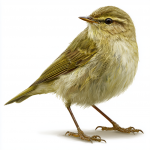
Marsh Sandpiper
Tringa stagnatilis
The Marsh Sandpiper is a rare migrant to Britain, typically seen during the spring and autumn migrations, often in wetland areas such as estuaries and coastal marshes. It is most likely to be spotted in the eastern and southern parts of the country, particularly during periods of favorable weather conditions.
Field Identification Guide
Use these features to identify Marsh Sandpiper in the field.
The Marsh Sandpiper can be identified by its long, black legs, medium-length bill, and distinctive white rump patch, as well as its overall slender build and long neck. Its upperparts are also notable for their dark brown to greyish-brown colouration with pale fringing on the feathers.
The Marsh Sandpiper is smaller than a Starling, measuring approximately 21-25 cm in length, and is also slightly smaller than other similar wader species.
The male Marsh Sandpiper has a breeding plumage characterized by dark brown to greyish-brown upperparts with pale fringing on the feathers, and white underparts with dark streaking on the breast and flanks, which is later replaced by a more subdued greyish-brown plumage during the winter months.
The female Marsh Sandpiper is similar to the male in terms of plumage, with the same dark brown to greyish-brown upperparts and white underparts, although the breeding plumage may be slightly less intensely coloured.
The Marsh Sandpiper's call is a sharp, high-pitched "chip" or "teek" sound, often repeated in a series of three or four notes, which can be heard during migration and breeding periods.
The Marsh Sandpiper is a probing feeder, using its long bill to search for small invertebrates in wet soil and mud, and can often be seen running or walking quickly while foraging, with a distinctive bobbing or teetering motion.
The Marsh Sandpiper can be confused with other small wader species, such as the Common Sandpiper or the Wood Sandpiper, but can be distinguished by its longer legs, more slender build, and distinctive white rump patch, as well as its sharp, high-pitched call.
Quick Facts
Who's spotted this?
Loading...
Recent community sightings
Loading recent sightings...