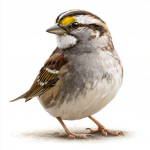
Arctic Warbler
Phylloscopus borealis
The Arctic Warbler is a rare but annual migrant to Britain, typically seen during the autumn, with most sightings occurring in the northern and eastern parts of the country. It is a species that breeds in the Arctic tundra and is most often encountered in Britain during its migration to Africa.
Field Identification Guide
Use these features to identify Arctic Warbler in the field.
The Arctic Warbler can be identified by its pale yellow-green upperparts, white underside, and distinctive white eye-ring, as well as its lack of distinctive wing bars or markings.
The Arctic Warbler is slightly smaller than a Chiffchaff, with a more slender build.
The male Arctic Warbler has a greenish-yellow back and wings, with a white belly and pale yellow breast, and its plumage does not vary significantly with the seasons.
The female Arctic Warbler is similar to the male, with no significant differences in plumage.
The Arctic Warbler's call is a sharp, metallic "tik" or "tsit", while its song is a series of short, melodic phrases often described as a repetitive, whistled "tu-tu-tu".
Arctic Warblers are active, insectivorous birds that forage for food in trees and shrubs, often flying from branch to branch in search of prey, and they have a distinctive, hovering flight style when chasing insects.
The Arctic Warbler can be confused with the Yellow-browed Warbler, but can be distinguished by its lack of yellow brow stripes and its more subdued colouration, as well as its distinctive white eye-ring and call.
Quick Facts
Who's spotted this?
Loading...
Recent community sightings
Loading recent sightings...