Grey Catbird
Dumetella carolinensis
The Grey Catbird is a rare vagrant to Britain, typically seen during the autumn and winter months, with most sightings occurring in the southern and eastern regions of the country. It is a medium-sized perching bird that can be found in a variety of habitats, including woodland edges and urban gardens.
Field Identification Guide
Use these features to identify Grey Catbird in the field.
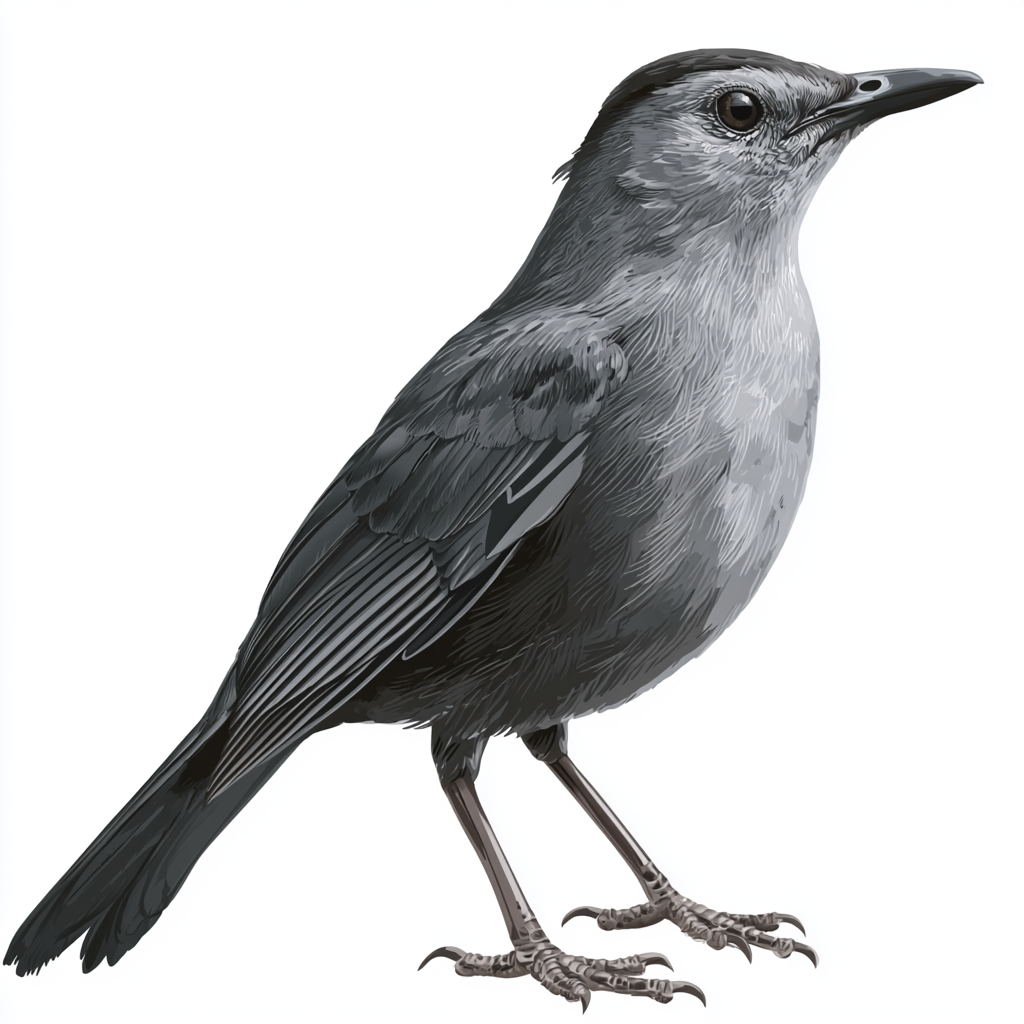
The Grey Catbird can be identified by its slate-grey plumage, black cap, and distinctive black tail with white undertail coverts, as well as its long, rounded tail and sharp, pointed bill.
The Grey Catbird is slightly smaller than a Blackbird, but larger than a Song Thrush.
The male Grey Catbird has a uniform slate-grey plumage, with a black cap that extends to the eyes and a sharp contrast between the grey back and white underside.
The female Grey Catbird is similar to the male, with no notable differences in plumage.
The Grey Catbird's call is a distinctive, nasal "mew" sound, while its song is a melodic, whistled phrase that often incorporates mimicry of other birds and sounds.
The Grey Catbird is a ground-foraging bird that feeds on insects, fruits, and berries, often hopping or running along the ground in search of food, and is known for its secretive and skulking behaviour.
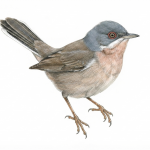
The Grey Catbird can be confused with the Blackcap, but can be distinguished by its grey plumage, black cap, and longer tail, as well as its distinctive call and song.
Quick Facts
Who's spotted this?
Loading...
Recent community sightings
Loading recent sightings...