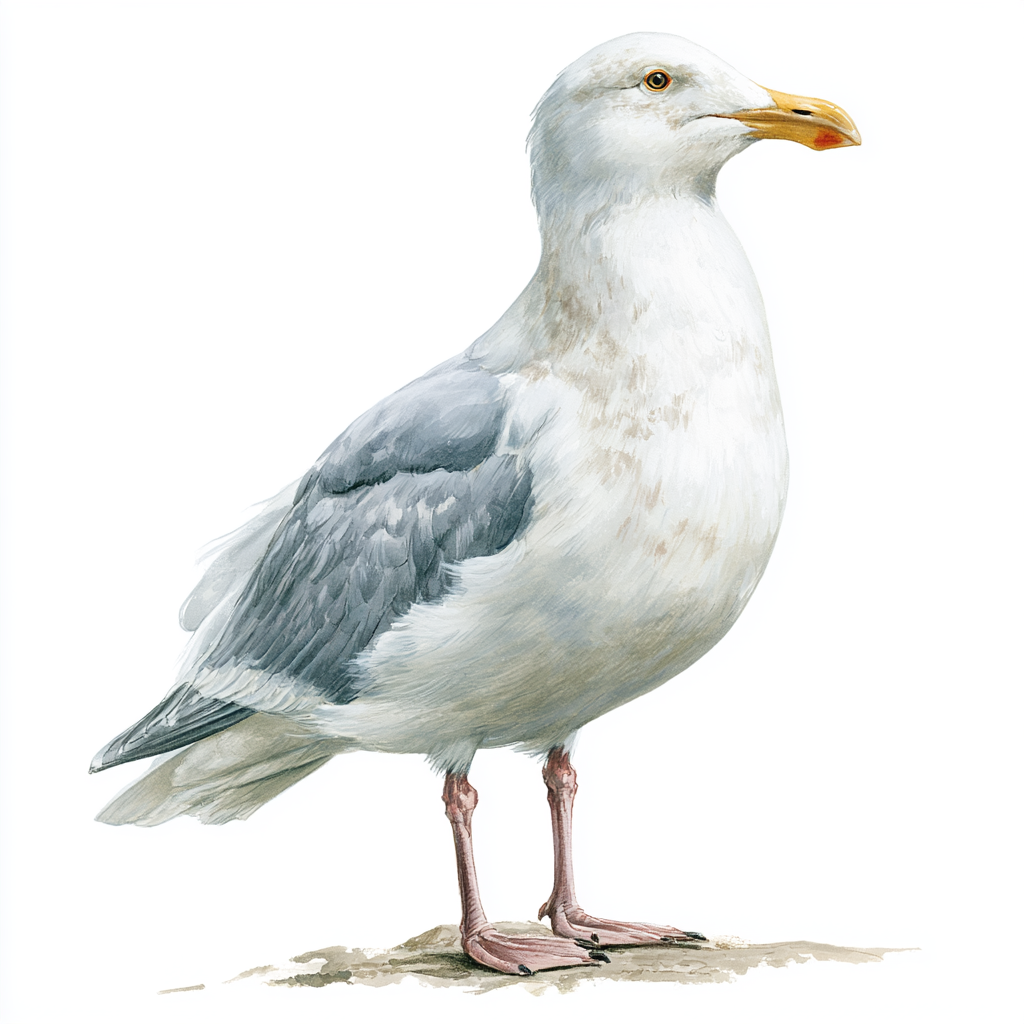
Glaucous-winged Gull
Larus glaucescens
The Glaucous-winged Gull is a rare visitor to Britain, typically seen along coastal areas, particularly in the west and north, with sightings often associated with extreme weather events or as a vagrant. It is most likely to be spotted during the winter months or during periods of strong westerly winds.
Field Identification Guide
Use these features to identify Glaucous-winged Gull in the field.
This species can be identified by its large size, white head, and distinctive grey wings with a bluish-grey tint, as well as its pinkish-yellow bill with a red spot. The wingtips are also notable for being grey with no white tips, distinguishing it from similar gull species.
The Glaucous-winged Gull is larger than a Lesser Black-backed Gull, with a more substantial build and broader wings.
The male's plumage is characterized by a white head, grey wings, and a white body, with a pinkish-yellow bill and legs, showing little to no seasonal variation.
Similar to the male, the female Glaucous-winged Gull exhibits the same plumage patterns and colours, with no notable differences.
The call of the Glaucous-winged Gull is a deep, raspy "kraa" or "gaak" sound, often repeated in a series of loud, drawn-out cries.
This gull is an opportunistic feeder, scavenging for food along beaches, in estuaries, and at sea, with a strong, steady flight and a tendency to follow boats and other birds to feed on scraps.
The Glaucous-winged Gull can be confused with the Herring Gull or the Lesser Black-backed Gull, but it can be distinguished by its grey wingtips without white edges and its more robust build, as well as its distinctive bill colour and pattern.
Quick Facts
Who's spotted this?
Loading...
Recent community sightings
Loading recent sightings...


