Rock Dove
Columba livia
The Rock Dove is a common and widespread species in Britain, often seen in urban areas, farmland, and coastal cliffs, particularly in the western and northern parts of the country, with sightings possible throughout the year. It is a highly adaptable bird, able to thrive in a variety of environments, from city centres to rural landscapes.
Field Identification Guide
Use these features to identify Rock Dove in the field.
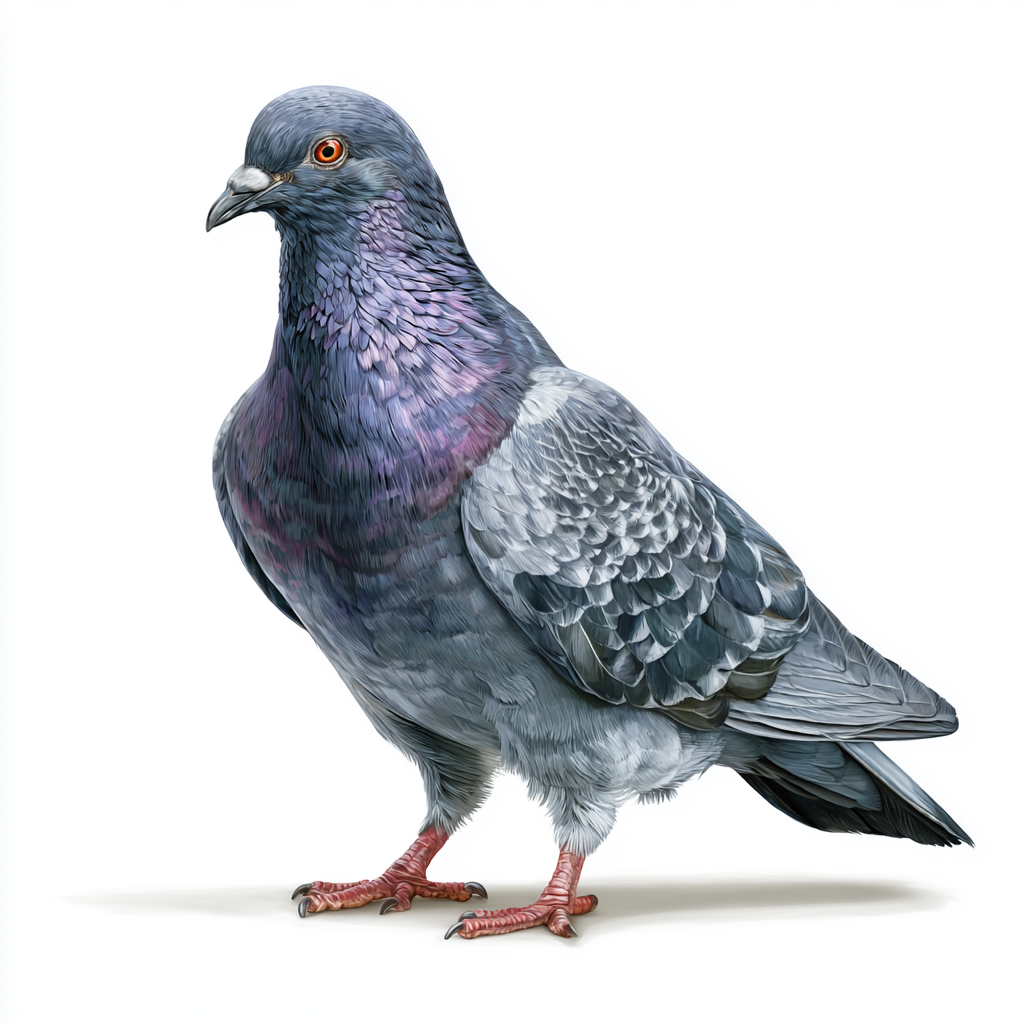
The Rock Dove can be identified by its grey-brown plumage, distinctive black neck band, and iridescent feathers on its neck, which can appear purple or green in the right light. Its stout body and small head are also notable features, with a short, squared-off tail.
The Rock Dove is slightly larger than a Blackbird, but smaller than a Woodpigeon, making it a medium-sized bird that is easily recognizable in the field.
The male Rock Dove has a glossy grey-brown plumage, with a distinctive black neck band and iridescent feathers on its neck, which can appear purple or green in the right light, with no significant seasonal variation in its plumage.
The female Rock Dove is similar to the male, with the same grey-brown plumage and black neck band, although she may appear slightly duller in colour, particularly on the neck and head.
The Rock Dove's call is a low, mournful cooing sound, often described as a soft "oo-oo-oo" or "coo-coo-coo", which can be heard throughout the year, particularly at dawn and dusk.
Rock Doves are ground-foraging birds, feeding on seeds, grains, and insects, and can often be seen walking or running along the ground in search of food, with a distinctive, bobbing gait, and a fast, direct flight when disturbed.
The Rock Dove can be confused with the Stock Dove, but can be distinguished by its darker grey-brown plumage, black neck band, and lack of a pale wing bar, as well as its more urban and coastal habits, whereas the Stock Dove prefers more rural and woodland areas.
Quick Facts
Who's spotted this?
Loading...
Recent community sightings
Loading recent sightings...