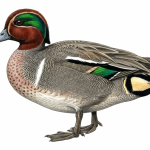
Blue Tit
Cyanistes caeruleus
The Blue Tit is a common and widespread species in Britain, seen throughout the year in woodlands, gardens, and parks, with its bright plumage making it a popular sight among birdwatchers. It is a frequent visitor to garden bird feeders, particularly during the winter months.
Field Identification Guide
Use these features to identify Blue Tit in the field.
The Blue Tit can be identified by its distinctive blue, yellow, and white plumage, with a blue cap on its head, white face, and yellow and green wings. Its small size and rounded shape also make it easily recognisable.
The Blue Tit is smaller than a Starling, measuring around 10-12 cm in length, and is one of the smallest tit species in Britain.
The male Blue Tit has a bright blue cap, white face, and yellow and green plumage on its wings and tail, with a distinctive white stripe above its eye, and its plumage remains relatively consistent throughout the year.
The female Blue Tit has similar plumage to the male, although it may be slightly less vibrant, with a smaller blue cap and less intense yellow and green colours.
The Blue Tit has a high-pitched, repetitive call, often transcribed as "tee-cher, tee-cher", and its song is a series of melodic phrases, typically sung by males during the breeding season.
Blue Tits are acrobatic birds, often seen flitting between branches and hanging upside down from twigs to feed on insects and seeds, and they are also known for their bold and curious nature, frequently visiting garden bird feeders.
The Blue Tit can be confused with the Great Tit and the Coal Tit, but it can be distinguished by its bright blue cap and yellow and green plumage, whereas the Great Tit has a broad black stripe above its eye and the Coal Tit has a black cap and white cheeks.
Quick Facts
Who's spotted this?
Loading...
Recent community sightings
Loading recent sightings...