Woodlark
Lullula arborea
The Woodlark is a scarce but breeding resident in southern Britain, typically seen in heathlands and open woodland edges, particularly in the spring and summer months. It is a rare sight in Britain, with most records coming from the southern counties, especially in Surrey and Hampshire.
Field Identification Guide
Use these features to identify Woodlark in the field.
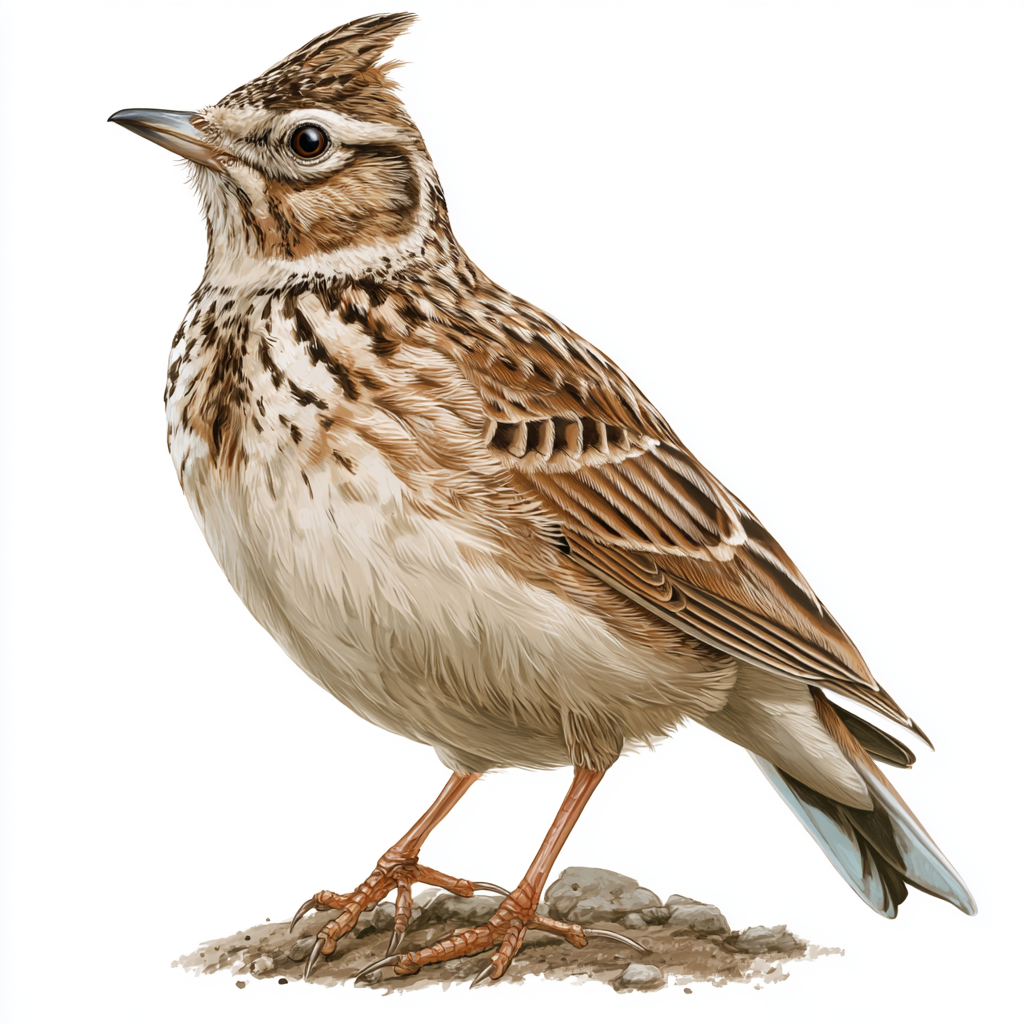
The Woodlark can be identified by its streaked breast, white outer tail feathers, and distinctive white wing bars, which distinguish it from other lark species. Its brownish-grey plumage and pale underside also help to set it apart.
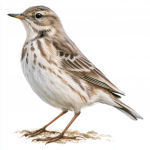
The Woodlark is slightly smaller than a Skylark, but larger than a Meadow Pipit, making it a medium-sized passerine bird.
The male Woodlark has a brownish-grey back and wings, with a pale underside and streaked breast, with a subtle buff tint to the chest and belly, which can vary slightly in intensity depending on the season.
The female Woodlark is similar to the male, with no significant differences in plumage, making it challenging to distinguish between the sexes based on appearance alone.
The Woodlark's song is a melodious, whistled phrase, often described as a series of descending notes, while its call is a sharp, metallic "tink" or "tek" sound.
Woodlarks are ground-foraging birds, feeding on insects, seeds, and small invertebrates, and can be seen running or walking on the ground with a distinctive gait, with a direct and swift flight style when disturbed or in pursuit of prey.
The Woodlark can be confused with the Skylark, but can be distinguished by its streaked breast, white wing bars, and shorter, more rounded tail, as well as its more subdued and melodious song.
Quick Facts
Who's spotted this?
Loading...
Recent community sightings
Loading recent sightings...