Dunnock
Prunella modularis
The Dunnock is a common and widespread species in Britain, found in a variety of habitats including gardens, woodlands, and hedgerows, and can be seen throughout the year. It is a frequent visitor to garden bird feeders, particularly during the winter months.
Field Identification Guide
Use these features to identify Dunnock in the field.
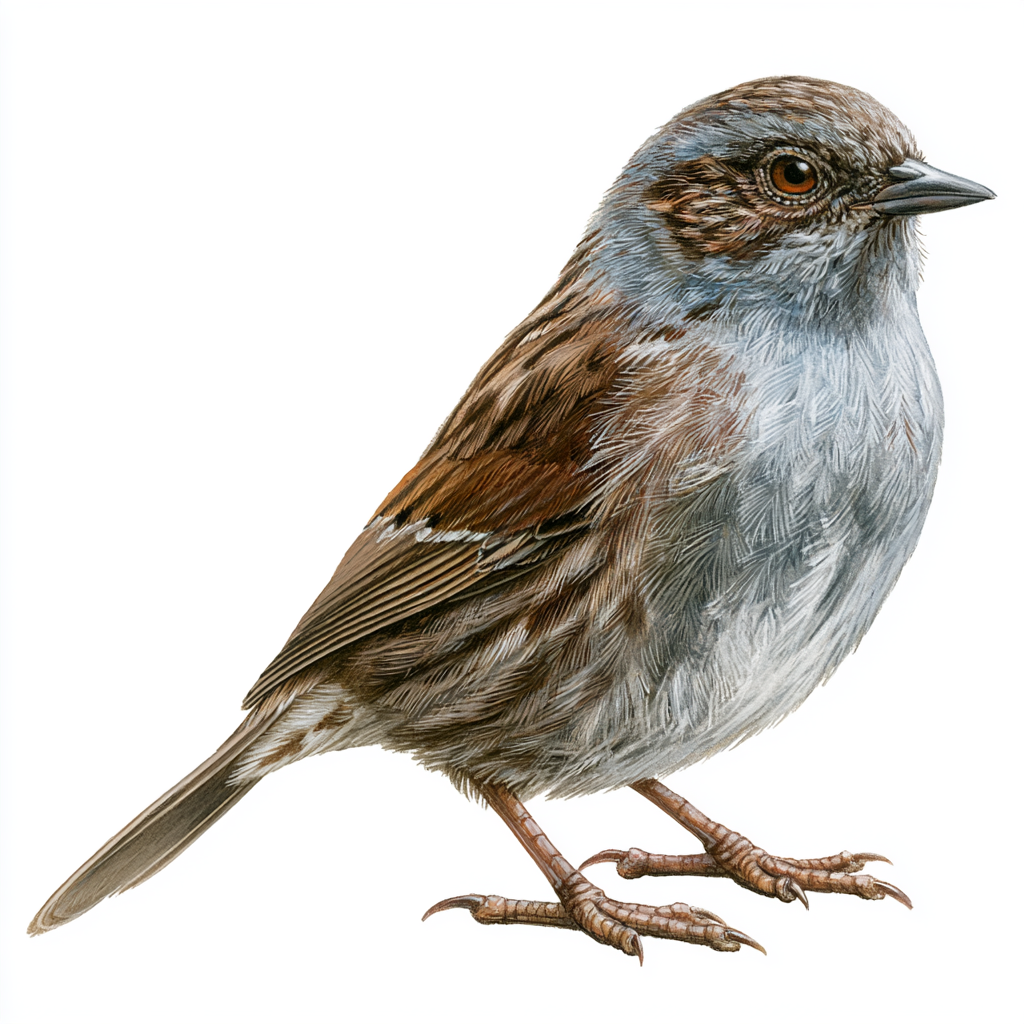
The Dunnock can be identified by its streaked breast, grey-brown back, and distinctive black lateral throat patches, as well as its slender bill and legs. Its greyish-brown colouration and lack of distinctive wing bars or other markings also help to distinguish it from other similar species.
The Dunnock is smaller than a Starling, but larger than a Blue Tit, measuring around 12-14 cm in length.
The male Dunnock has a grey-brown back, wings, and tail, with a streaked breast and belly, and a distinctive black lateral throat patch, with little seasonal variation in its plumage.
The female Dunnock is similar to the male, with the same grey-brown colouration and streaked breast, although she may be slightly duller in appearance.
The Dunnock's call is a sharp, metallic "tink" or "tek" sound, often repeated in a series, while its song is a sweet, melodious phrase, typically sung from a prominent perch.
Dunnocks are ground-foraging birds, feeding on seeds, insects, and spiders, and can often be seen hopping along the ground or scratching in leaf litter, with a distinctive, rather hesitant flight style.
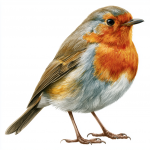
The Dunnock can be confused with the House Sparrow or the Robin, but can be distinguished from these species by its streaked breast, grey-brown colouration, and lack of distinctive wing bars or red breast patches.
Quick Facts
Who's spotted this?
Loading...
Recent community sightings
Loading recent sightings...