Woodpigeon
Columba palumbus
The Woodpigeon is a common and widespread species in Britain, found in woodlands, farmland, and urban areas throughout the year, with peak sightings during the breeding season from March to July. It is a familiar sight in many British gardens and parks, particularly where food is abundant.
Field Identification Guide
Use these features to identify Woodpigeon in the field.
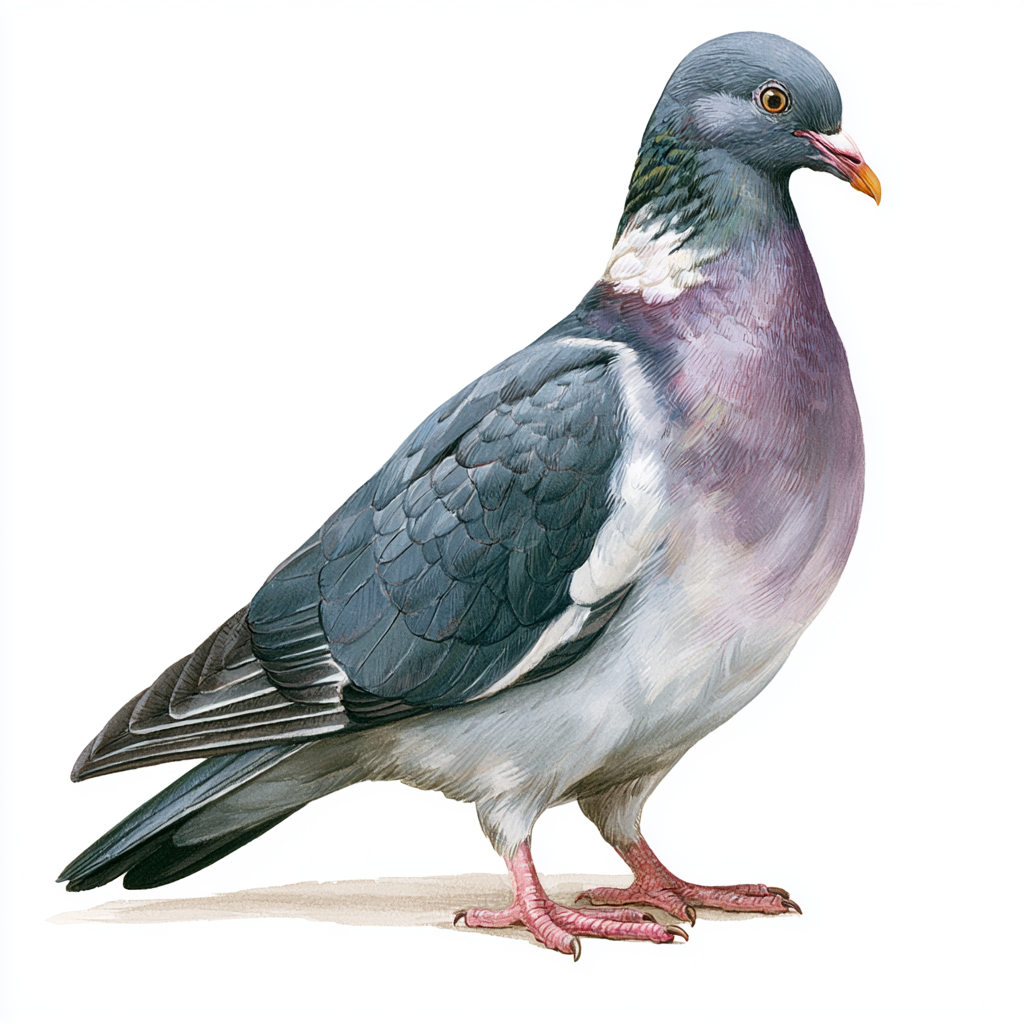
The Woodpigeon can be identified by its distinctive white neck patch, grey-brown back, and black wing bars, as well as its large size and small white patches on the wings. Its broad wings and rounded tail are also notable features.
The Woodpigeon is larger than a Blackbird, but smaller than a Crow, making it a medium to large-sized bird.
The male Woodpigeon has a grey-brown back, wings, and tail, with a white neck patch and black wing bars, and its plumage remains relatively consistent throughout the year.
The female Woodpigeon is similar to the male, with no significant differences in plumage, although she may appear slightly duller in colour.
The Woodpigeon's call is a low, mournful cooing sound, often described as a repetitive "oo-oo-oo" or "coo-coo-coo", which can be heard throughout the day.
Woodpigeons are ground-foraging birds, feeding on a variety of plant material, including seeds, fruits, and leaves, and they are also known to visit gardens and farmland in search of food, often flying in a swift and direct manner.
The Woodpigeon can be confused with the Stock Dove, but can be distinguished by its larger size, white neck patch, and black wing bars, which are not found on the Stock Dove.
Quick Facts
Who's spotted this?
Loading...
Recent community sightings
Loading recent sightings...