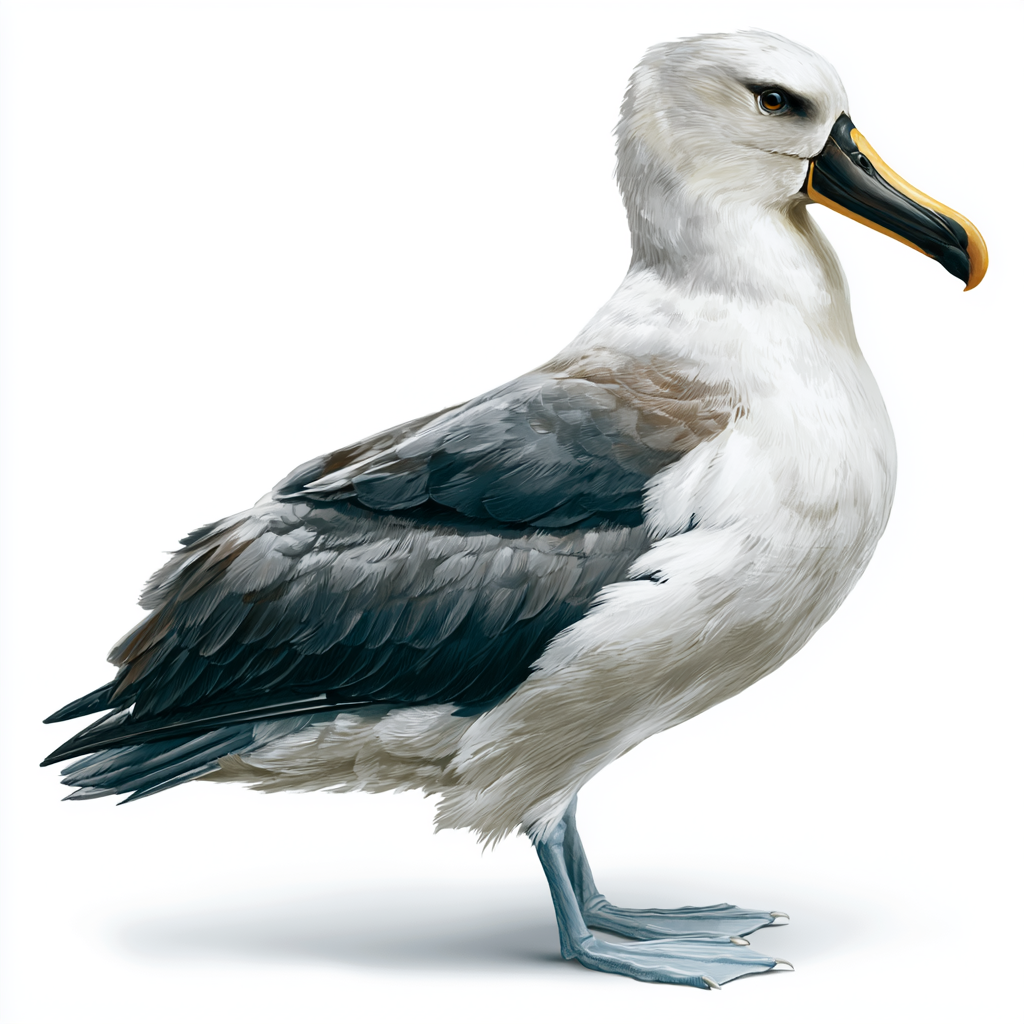
Atlantic Yellow-nosed Albatross
Thalassarche chlororhynchos
The Atlantic Yellow-nosed Albatross is a rare visitor to British waters, typically seen in the Atlantic Ocean to the west of the UK, particularly during periods of strong winds or storms. It is most likely to be spotted by experienced birders on pelagic trips or from coastal headlands.
Field Identification Guide
Use these features to identify Atlantic Yellow-nosed Albatross in the field.
This species can be identified by its distinctive yellow nostrils, greyish-brown back, and white underparts, as well as its large size and long, slender wings. Its black brow and greyish-brown crown are also notable features.
The Atlantic Yellow-nosed Albatross is larger than a Herring Gull, with a wingspan that can reach up to 2.2 metres in length.
The male's plumage is characterized by a greyish-brown back, white underparts, and a black brow, with a distinctive yellow stripe on the nostrils, and does not vary significantly with the seasons.
The female's plumage is similar to that of the male, with no significant differences in colour or pattern.
The Atlantic Yellow-nosed Albatross emits a series of high-pitched, whistling calls, often described as a loud, piercing "pee-pee-pee" or "kee-kee-kee".
This species is a skilled glider, using wind currents to stay aloft for long periods, and feeds on fish, squid, and krill by diving and swooping into the water, often following ships or other birds to scavenge for food.
The Atlantic Yellow-nosed Albatross can be confused with other albatross species, such as the Black-browed Albatross, but can be distinguished by its yellow nostrils and greyish-brown crown, which are distinctive features of this species.
Quick Facts
Who's spotted this?
Loading...
Recent community sightings
Loading recent sightings...