Common Yellowthroat
Geothlypis trichas
The Common Yellowthroat is a rare migrant to Britain, typically seen during the autumn months, particularly in the southern and western regions. It is an occasional visitor to the UK, with most sightings occurring on the coastlines and islands.
Field Identification Guide
Use these features to identify Common Yellowthroat in the field.
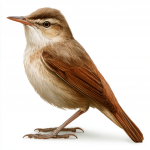
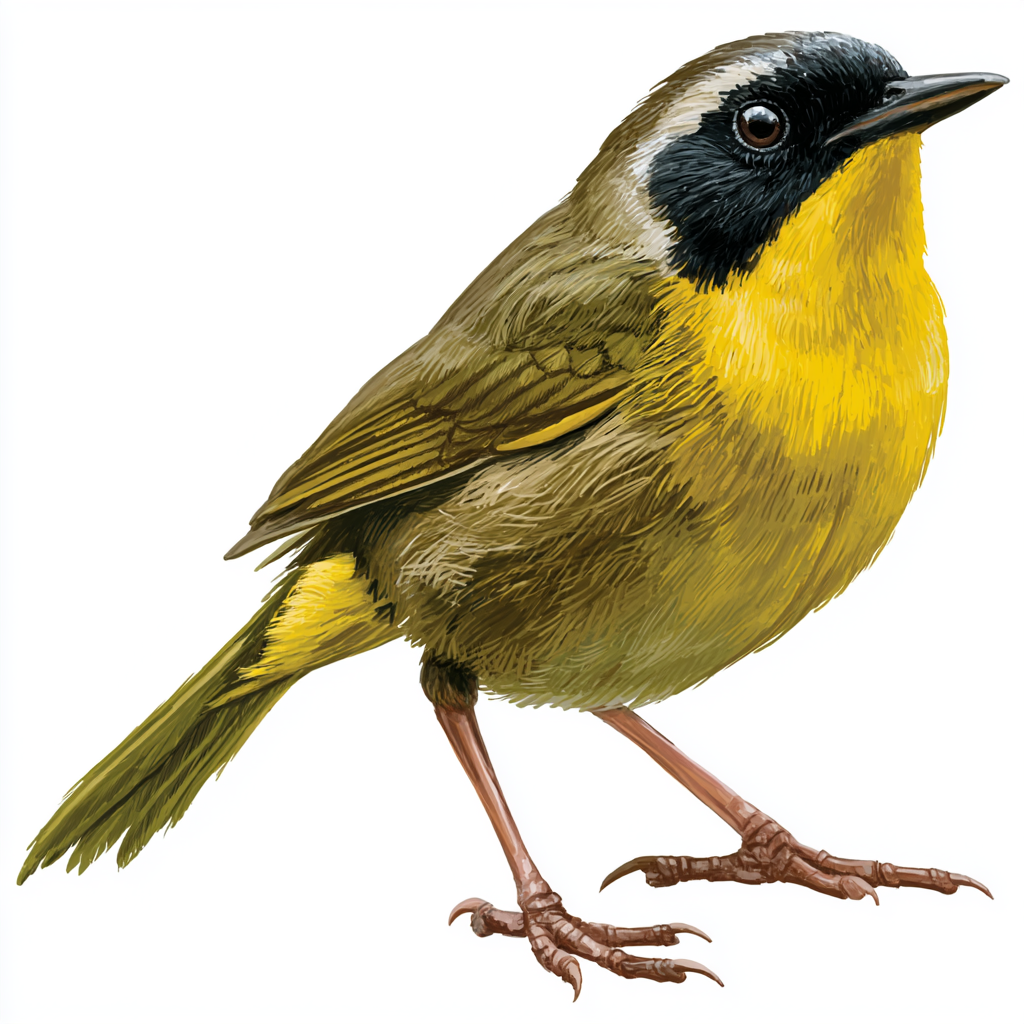
The Common Yellowthroat can be identified by its bright yellow throat patch, olive-green back, and distinctive white eye ring, which distinguish it from other warblers. Its greyish-brown head and white belly also help to set it apart.
The Common Yellowthroat is smaller than a Blackcap, measuring around 10-12 cm in length, which is roughly the same size as a Goldcrest.
The male Common Yellowthroat has a bright yellow throat patch, a greyish-brown head, and an olive-green back, with white wing bars and a white belly, although the brightness of the colours may vary depending on the season.
The female Common Yellowthroat is similar to the male but lacks the bright yellow throat patch, instead having a pale yellow or whitish throat, and tends to have a more subdued colouration overall.
The Common Yellowthroat's call is a sharp, metallic "tink" or "tik" sound, while its song is a series of short, musical phrases that sound like "witchita-witchita-witchita".
The Common Yellowthroat is a skulking species that feeds on insects and spiders in dense vegetation, often flying low to the ground and making short, darting flights as it forages for food.
The Common Yellowthroat can be confused with other warblers, such as the Yellow Warbler or the Bonelli's Warbler, but can be distinguished by its bright yellow throat patch and distinctive white eye ring, as well as its greyish-brown head and olive-green back.
Quick Facts
Who's spotted this?
Loading...
Recent community sightings
Loading recent sightings...