Aquatic Warbler
Acrocephalus paludicola
The Aquatic Warbler is a rare migrant in Britain, typically seen during passage periods, particularly in the autumn, in wetland areas such as marshes and reedbeds. It is most likely to be spotted in the southern and eastern parts of the country, although sightings are generally infrequent.
Field Identification Guide
Use these features to identify Aquatic Warbler in the field.
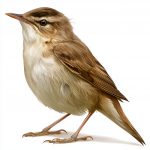
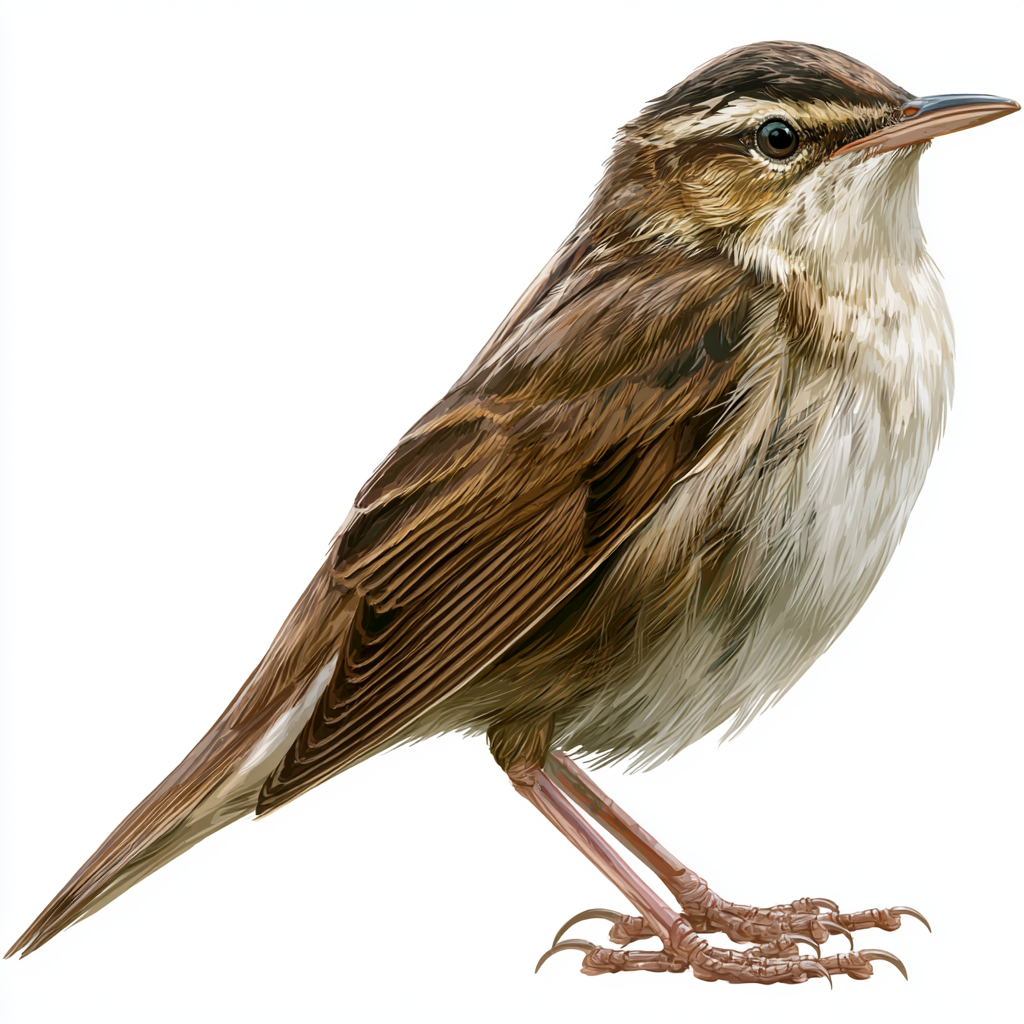
The Aquatic Warbler can be identified by its distinctive head pattern, featuring a broad whitish stripe above the eye and a dark crown, as well as its pale yellowish-brown plumage and long, broad tail. Its overall appearance is also characterized by a pale throat patch and a faint pale eyebrow.
The Aquatic Warbler is slightly smaller than a Reed Warbler, with a length of around 12-13 cm, making it a relatively compact bird.
The male Aquatic Warbler has a brownish-grey back, wings, and tail, with a pale yellowish-brown breast and belly, and a distinctive dark crown with a pale central stripe, with little seasonal variation in its plumage.
The female Aquatic Warbler is similar to the male, with a slightly duller and more subdued colouration, but overall, the sexes are alike in terms of plumage.
The Aquatic Warbler's call is a sharp, metallic "tek" or "tink" sound, often repeated in a series, while its song is a melodic, warbling phrase that is rarely heard in Britain.
The Aquatic Warbler is a skulking bird that feeds on insects and other small invertebrates in dense vegetation, often flying low and quickly between patches of cover, with a distinctive, fluttering flight style.
The Aquatic Warbler can be confused with other warbler species, such as the Sedge Warbler and the Reed Warbler, but can be distinguished by its distinctive head pattern, pale throat patch, and broad, pale eyebrow, as well as its overall size and shape.
Quick Facts
Who's spotted this?
Loading...
Recent community sightings
Loading recent sightings...