Baillon’s Crake
Zapornia pusilla
Baillon's Crake is a rare and secretive visitor to Britain, typically seen in wetland areas during the summer months, with most sightings occurring in the southern regions. It is a migratory species that breeds in Europe and Asia, but only occasionally wanders to Britain.
Field Identification Guide
Use these features to identify Baillon’s Crake in the field.
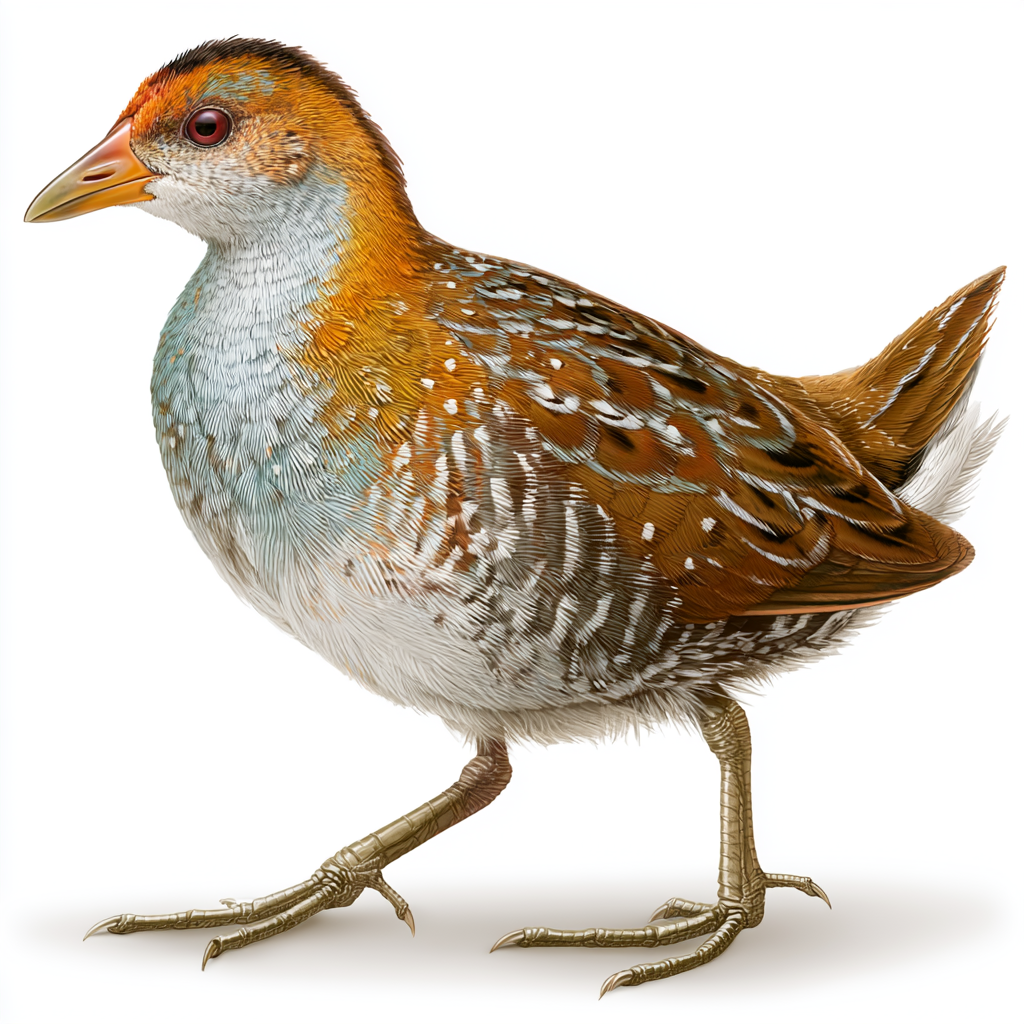
The Baillon's Crake can be identified by its streaked brown back, white throat, and distinctive white stripes above its eyes, as well as its relatively long legs and short tail.
The Baillon's Crake is smaller than a Moorhen, but larger than a Blue Tit.
The male Baillon's Crake has a brown back with dark streaks, a white throat and belly, and a greyish-brown breast with darker streaks, with little seasonal variation.
The female Baillon's Crake is similar to the male, with slight variations in the intensity of the streaking on the back and breast.
The Baillon's Crake has a distinctive, high-pitched call that sounds like a series of whistled "weet" or "wit" notes, often repeated in a rapid sequence.
Baillon's Crakes are skulking birds that feed on small invertebrates, seeds, and aquatic plants, often in dense vegetation, and have a distinctive, jerky gait when walking or running.
The Baillon's Crake can be confused with the Little Crake or the Spotted Crake, but can be distinguished by its white throat, lack of spots on the breast, and distinctive white stripes above the eyes.
Quick Facts
Who's spotted this?
Loading...
Recent community sightings
Loading recent sightings...