Buff-breasted Sandpiper
Calidris subruficollis
The Buff-breasted Sandpiper is a rare migrant to Britain, typically seen during the autumn, with most sightings occurring in the western and northern parts of the country. It can be spotted in a variety of wetland habitats, including estuaries, marshes, and muddy pools.
Field Identification Guide
Use these features to identify Buff-breasted Sandpiper in the field.
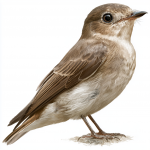
This species can be identified by its distinctive buff-breasted plumage, long neck, and relatively long legs, as well as its dark brown back with yellowish-brown feathers fringed with black.
The Buff-breasted Sandpiper is smaller than a Starling, measuring around 18-20 cm in length.
The male's plumage is characterized by a buff-breasted chest, with a dark brown back and yellowish-brown feathers fringed with black, and a white belly, with little to no seasonal variation.
The female's plumage is similar to the male's, with no notable differences.
The Buff-breasted Sandpiper's call is a low, whistled "chiff-chiff-chiff" or a sharp "kip-kip-kip" sound.
This species is known for its long annual migration and can be seen feeding on small invertebrates, such as insects and crustaceans, in wetland habitats, often running or walking while foraging, and exhibiting a swift, direct flight style.
The Buff-breasted Sandpiper can be confused with other calidrid sandpipers, such as the Curlew Sandpiper, but can be distinguished by its buff-breasted plumage and lack of distinctive markings on its back or head.
Quick Facts
Who's spotted this?
Loading...
Recent community sightings
Loading recent sightings...