Blue-cheeked Bee-eater
Merops persicus
The Blue-cheeked Bee-eater is a rare vagrant in Britain, with most sightings occurring during migration periods, and can be spotted in the southern regions of the country. It is a striking bird that can be seen in the UK, although such occurrences are extremely rare and often associated with exceptional weather conditions.
Field Identification Guide
Use these features to identify Blue-cheeked Bee-eater in the field.
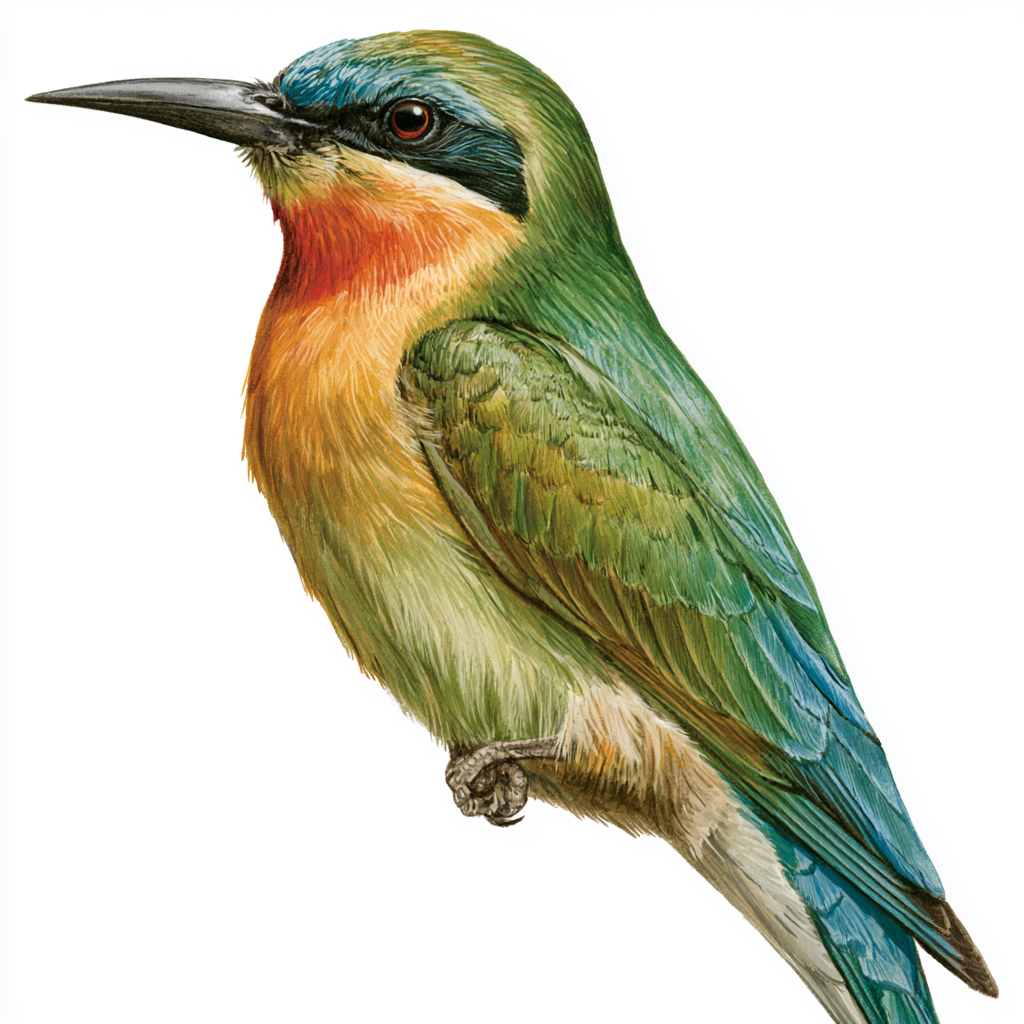
This species can be identified by its bright plumage, long curved beak, and distinctive blue cheek patches, which distinguish it from other bee-eaters. Its slender body and long wings are also notable features.
The Blue-cheeked Bee-eater is slightly larger than a Blue Tit, but smaller than a Starling, making it a medium-sized bird.
The male Blue-cheeked Bee-eater has a vibrant green back, yellow throat, and blue cheek patches, with a black stripe above its cheek, and its plumage remains relatively consistent throughout the year.
The female Blue-cheeked Bee-eater is similar to the male, with slight variations in the intensity of its colours, but overall, its plumage is nearly indistinguishable from that of the male.
The Blue-cheeked Bee-eater's call is a melodic, high-pitched "tir-tir-tir" or "tree-tree-tree", often repeated in a series, and its song is a cheerful, whistled phrase.
This species is known for its agile flight and swift pursuits of insects in mid-air, and it often perches on low-lying branches or wires, scanning its surroundings for potential prey.
The Blue-cheeked Bee-eater can be confused with the European Bee-eater, but it can be distinguished by its blue cheek patches and black stripe above its cheek, which are not present in the European Bee-eater.
Quick Facts
Who's spotted this?
Loading...
Recent community sightings
Loading recent sightings...