White-throated Sparrow
Zonotrichia albicollis
The White-throated Sparrow is a rare visitor to Britain, typically seen during the autumn and winter months, particularly in the southern and western regions. It is most often spotted in woodland edges, hedgerows, and gardens with dense vegetation.
Field Identification Guide
Use these features to identify White-throated Sparrow in the field.
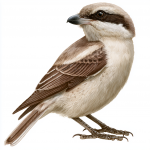
The White-throated Sparrow can be identified by its distinctive white throat patch, yellow lores, and a black stripe through the eye, with a greyish-brown back and wings. Its white stripes on the head and yellow beak are also notable features.
The White-throated Sparrow is slightly larger than a House Sparrow, but smaller than a Starling.
The male White-throated Sparrow has a greyish-brown back and wings, with a white throat patch, yellow lores, and a black stripe through the eye, with two white stripes on the head, one above the other.
The female White-throated Sparrow is similar to the male, but with a slightly duller colouration and a less distinct black stripe through the eye.
The White-throated Sparrow's call is a sharp, metallic "tik" or "tink" sound, while its song is a series of whistled phrases, often described as a clear, musical "Oh-so-sweet" or "Old-sam-peabody".
The White-throated Sparrow is a ground-foraging bird, feeding on seeds, fruits, and insects, and is often seen scratching in leaf litter with its strong feet, with a hopping or running gait when on the ground.
The White-throated Sparrow can be confused with the Dark-eyed Junco, but can be distinguished by its white throat patch and yellow lores, which are not present in the Junco, as well as its distinctive head stripes.
Quick Facts
Who's spotted this?
Loading...
Recent community sightings
Loading recent sightings...