Cattle Egret
Ardea ibis
The Cattle Egret is a rare but increasing visitor to Britain, typically seen in the summer months, particularly in the southern counties, often in association with cattle or other livestock. It can be spotted in a variety of habitats, including wet meadows, farmland, and coastal areas.
Field Identification Guide
Use these features to identify Cattle Egret in the field.
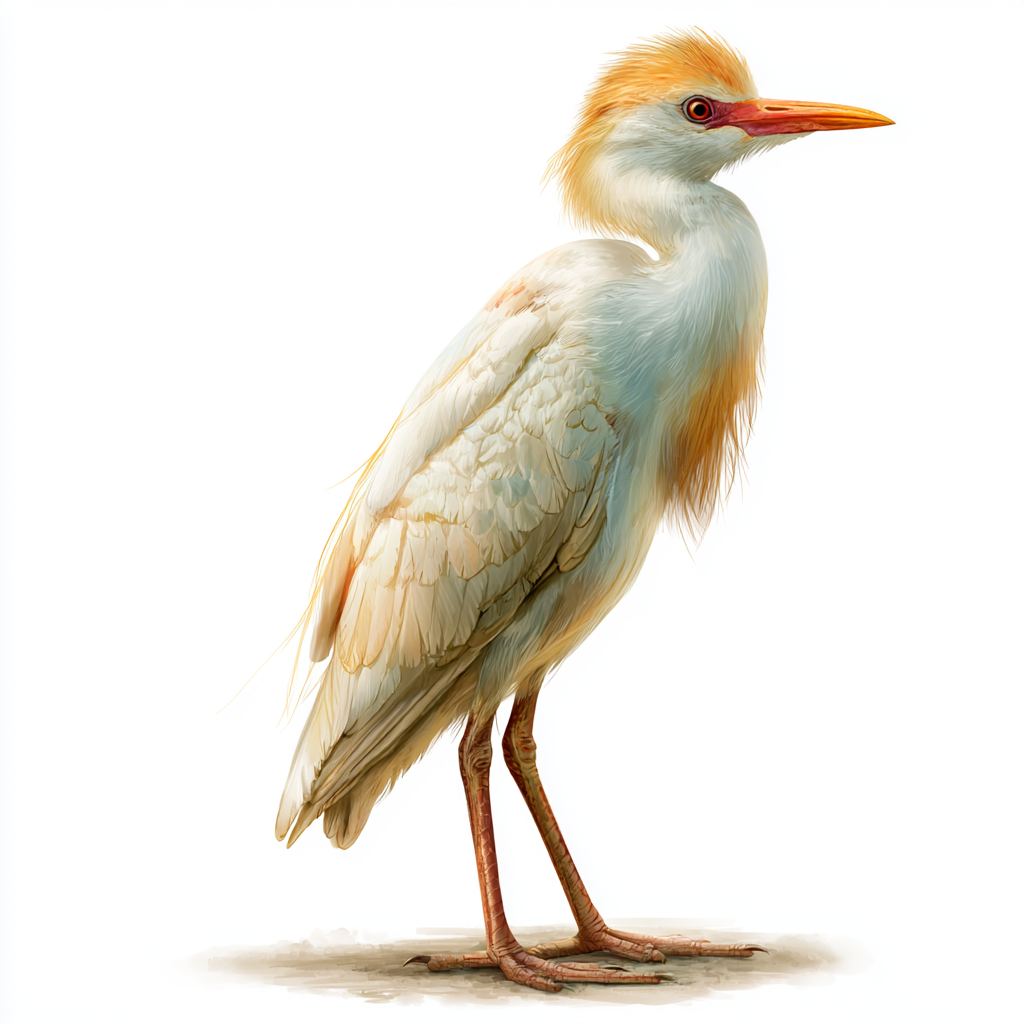
The Cattle Egret can be identified by its stocky build, yellow bill, and distinctive yellow or orange plumage on its head, neck, and back during the breeding season, as well as its relatively short, stubby neck.
The Cattle Egret is slightly smaller than a Grey Heron, but larger than a Little Egret.
The male Cattle Egret has a white body with yellow or orange plumage on its head, neck, and back during the breeding season, which fades to white outside of breeding.
Similar to the male, with no significant differences in plumage.
The Cattle Egret's call is a low, guttural "ruk" or "rok", often repeated in a series of two or three notes.
Cattle Egrets are known for their unique feeding behaviour, where they follow cattle or other livestock to catch insects and small invertebrates disturbed by the animals' movements, and they also have a distinctive, buoyant flight style.
The Cattle Egret can be confused with the Little Egret, but can be distinguished by its stocky build, shorter neck, and yellow bill, as well as its association with livestock.
Quick Facts
Who's spotted this?
Loading...
Recent community sightings
Loading recent sightings...