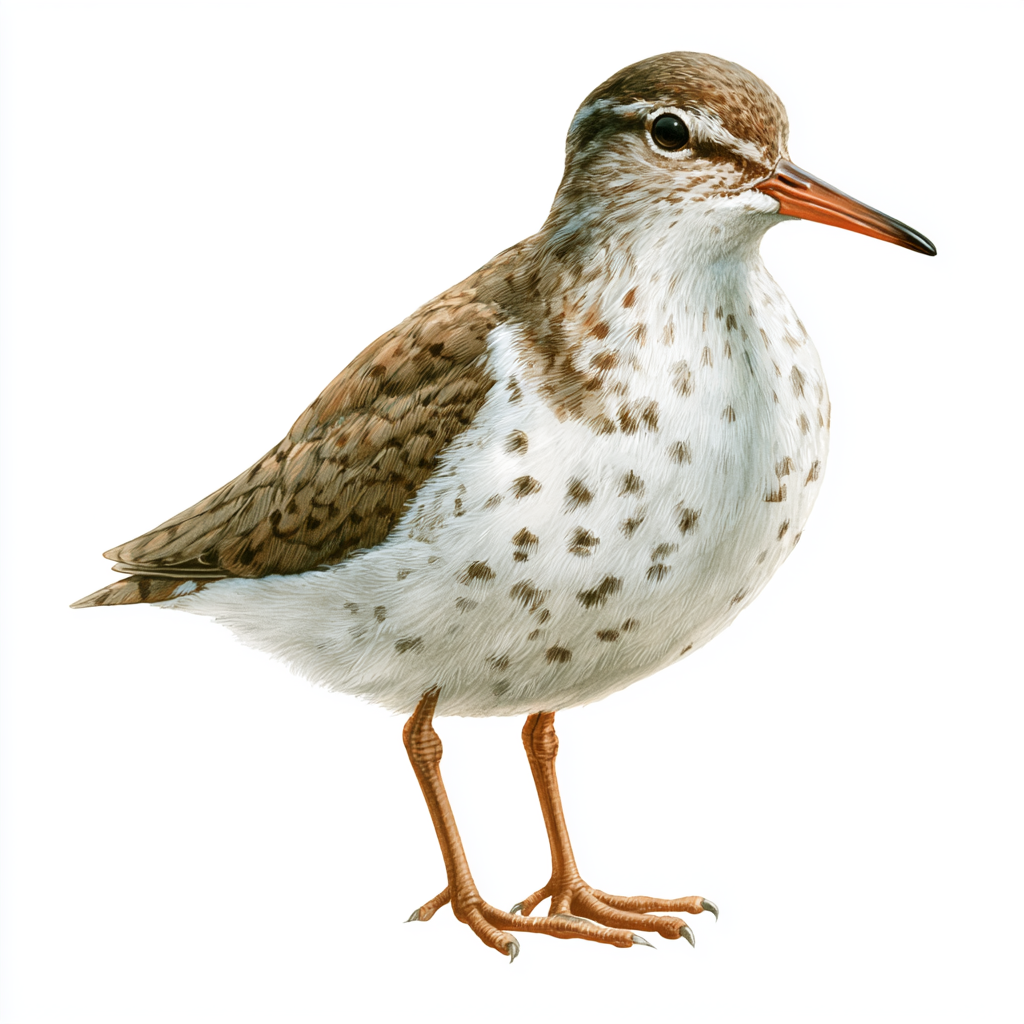
Common Sandpiper
Actitis hypoleucos
The Common Sandpiper is a regular migrant to Britain, seen in a variety of wetland habitats during the spring and autumn, with some birds remaining to breed in the north and west of the country. It can be found on muddy edges, sandy beaches, and shallow pools from April to October.
Field Identification Guide
Use these features to identify Common Sandpiper in the field.
The Common Sandpiper is distinguished by its brown back, white underside, and distinctive white spur on the shoulder, as well as its straight black bill and yellowish-green legs. Its overall appearance is also characterized by a distinctive wing pattern and a white eye-ring.
The Common Sandpiper is smaller than a Starling, measuring around 18-20 cm in length, and is one of the smaller waders found in Britain.
The male Common Sandpiper has a brown back with darker streaks, a white underside, and a white spur on the shoulder, with little seasonal variation in its plumage, although it may appear more worn in the summer.
The female Common Sandpiper is similar to the male, with no significant differences in plumage, although females may have slightly darker markings on the back.
The Common Sandpiper's call is a loud, high-pitched "weet-weet-weet" or "chu-chu-chu", often given in flight or when alarmed.
The Common Sandpiper is a solitary bird that feeds on small invertebrates, such as insects and crustaceans, by probing into mud and sand with its bill, and is known for its rapid, erratic flight and its habit of flying low over the water.
The Common Sandpiper can be confused with the Green Sandpiper, but can be distinguished by its white spur on the shoulder, its straighter bill, and its more slender build, as well as its different call and feeding behaviour.
Quick Facts
Who's spotted this?
Loading...
Recent community sightings
Loading recent sightings...


