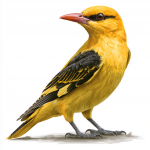
Glaucous Gull
Larus hyperboreus
The Glaucous Gull is a rare winter visitor to Britain, typically seen in coastal areas, particularly in the north and east, from October to April. It is most often encountered in areas with abundant food, such as fishing ports, estuaries, and beaches.
Field Identification Guide
Use these features to identify Glaucous Gull in the field.
The Glaucous Gull can be identified by its pale grey back and wings, white head and body, and yellow bill with a red spot, as well as its large size and broad wings. Its pale eyes and lack of distinct wing tips also distinguish it from other gull species.
The Glaucous Gull is larger than a Herring Gull, with a more massive build and broader wings.
The male Glaucous Gull has a pale grey back and wings, with a white head and body, and a yellow bill with a red spot, which remains consistent throughout the year.
The female Glaucous Gull is similar to the male, with no notable differences in plumage.
The Glaucous Gull has a loud, harsh call, often described as a deep "kraa" or "gaak" sound, which is similar to that of other large gulls.
Glaucous Gulls are opportunistic feeders, scavenging for fish, carrion, and other prey in coastal areas, and are known for their aggressive behaviour when competing for food. They have a slow, deliberate flight style, with deep wingbeats.
The Glaucous Gull can be confused with the Iceland Gull, but can be distinguished by its larger size, broader wings, and pale eyes, as well as its more robust bill and lack of distinct wing tips.
Quick Facts
Who's spotted this?
Loading...
Recent community sightings
Loading recent sightings...